

Tonewoods & Materials
Veneer Top vs Cap Top Guitar: What’s the Difference and Which One Should You Choose?
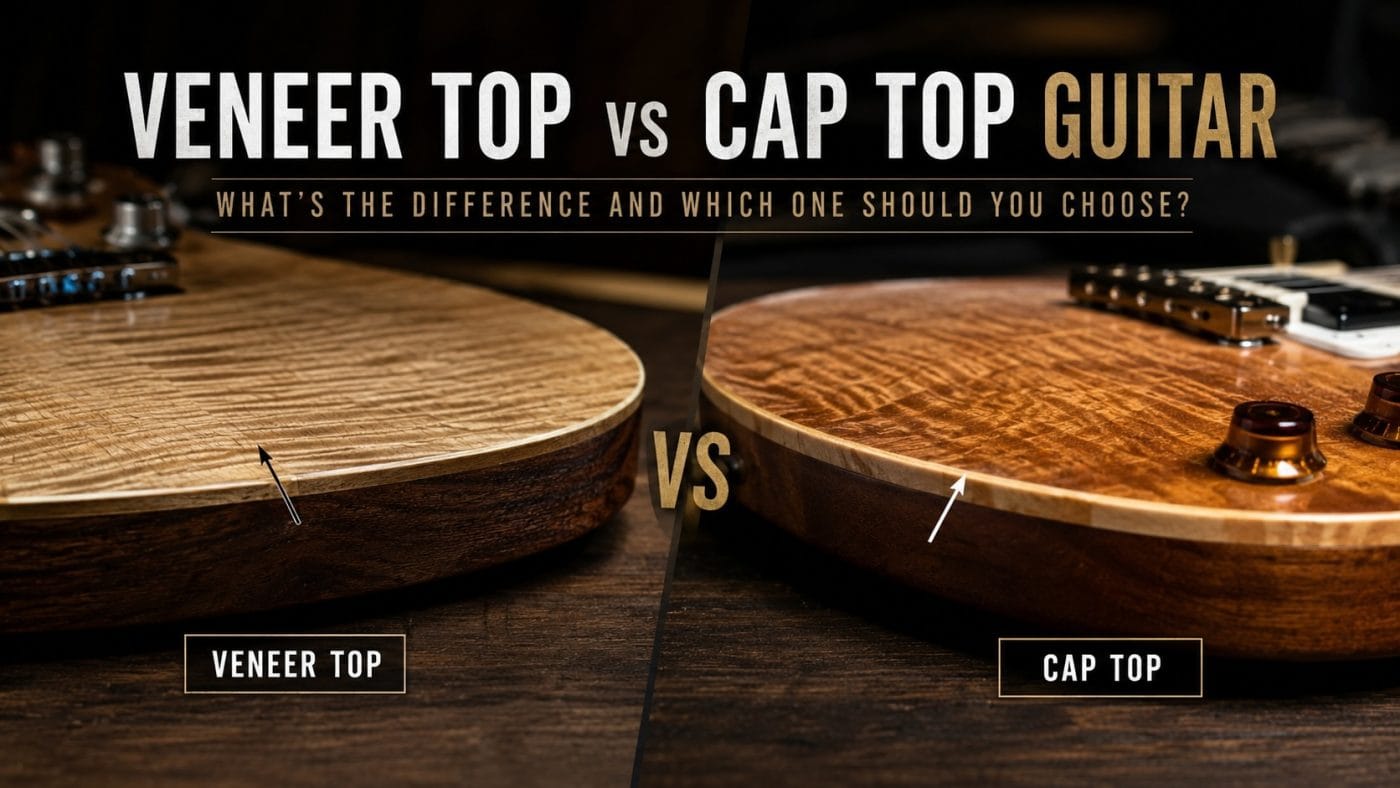
When choosing or designing a custom electric guitar, one of the most important visual decisions is the top wood. A beautifully figured maple top, quilted maple top, burl top, spalted maple top, or exotic wood top can completely change the personality of a guitar.
However, not all guitar tops are built the same way.
Two terms you will often see are veneer top and cap top. At first glance, they may look similar, especially when both guitars have a beautiful flame or quilted figure. But structurally, tonally, and in terms of value, they are quite different.
So what is the difference between a veneer top and a cap top guitar? Is one better than the other? And which one should you choose for your custom guitar build?
In this guide, we will explain everything you need to know.
What Is a Veneer Top Guitar?
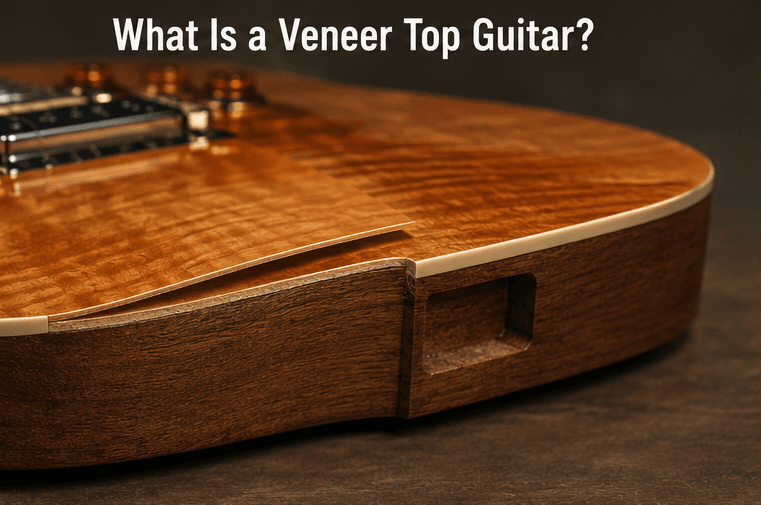
A veneer top guitar uses a very thin decorative layer of wood placed over the main body wood of the guitar.
In most cases, the veneer is used mainly for appearance. It allows the guitar to show the beauty of expensive or highly figured wood without using a thick piece of that material.
For example, a guitar may have a mahogany, basswood, alder, or ash body underneath, with a thin flame maple veneer on top. From the outside, it can still look like a high-end figured maple guitar, but the actual figured top layer is very thin.
Veneer tops are commonly used on guitars where the goal is to achieve a beautiful appearance at a more affordable price.
Common veneer top woods include:
- Flame maple veneer
- Quilted maple veneer
- Spalted maple veneer
- Burl veneer
- Zebrawood veneer
- Walnut veneer
- Ash veneer
- Exotic wood veneer
A veneer top can look stunning, especially under transparent, burst, or stained finishes. However, because the layer is thin, it usually does not contribute much to the guitar’s tone or resonance.
What Is a Cap Top Guitar?
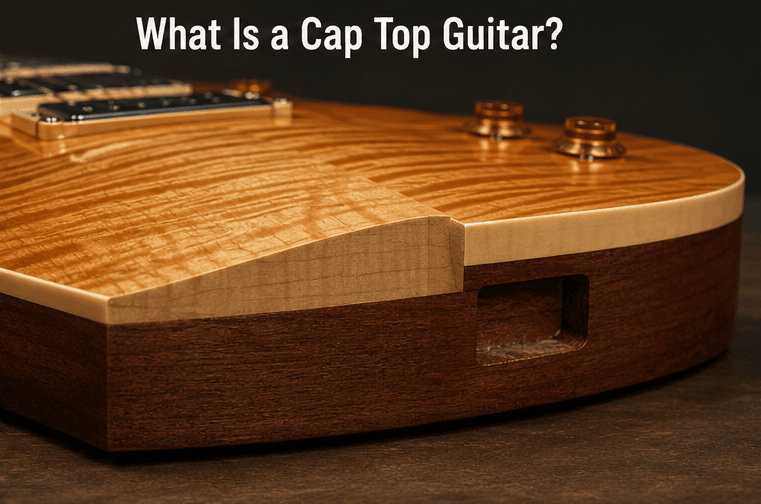
A cap top guitar uses a thicker piece of wood attached to the main body wood. This top is not just decorative; it becomes a meaningful part of the guitar’s construction.
A cap top is often used in higher-end guitars, especially when combining different woods for both tone and appearance.
One of the most famous examples is a mahogany body with a maple cap. This construction is widely associated with thick, warm sustain from the mahogany, balanced by the brightness and clarity of the maple top.
Unlike a veneer, a cap top has enough thickness to potentially influence the guitar’s response, attack, brightness, and overall feel.
Common cap top woods include:
- Flame maple cap
- Quilted maple cap
- Plain maple cap
- Ash cap
- Walnut cap
- Koa cap
- Black limba cap
- Exotic hardwood cap
A cap top is often chosen when the player wants both a premium look and a more substantial wood combination.
Veneer Top vs Cap Top: The Main Difference
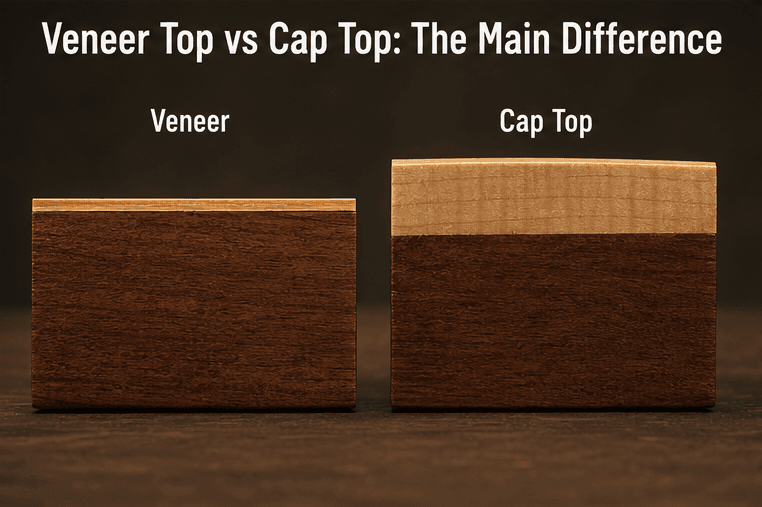
The biggest difference between a veneer top and a cap top is thickness and purpose.
A veneer top is a thin decorative surface layer. A cap top is a thicker structural layer that becomes part of the guitar body.
Here is the simple version:
Feature | Veneer Top | Cap Top |
|---|---|---|
Thickness | Very thin (0.6mm) | Much thicker (3-6mm) |
Main purpose | Appearance | Appearance and construction |
Tone impact | Minimal | More noticeable |
Cost | More affordable | More expensive |
Visual effect | Can look beautiful | Usually more premium |
Durability when carved/sanded | More limited | More flexible |
Common use | Affordable figured tops | Higher-end or custom builds |
Both options can look excellent, but they serve different purposes.
Does a Veneer Top Affect Guitar Tone?
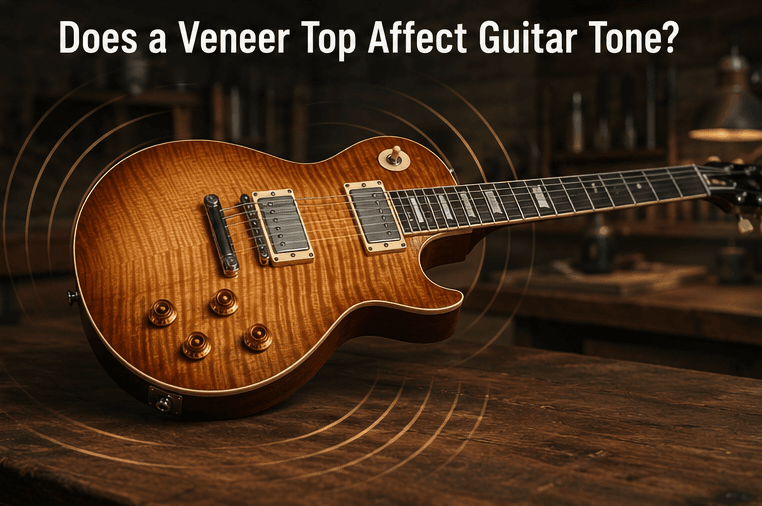
In most cases, a veneer top has very little effect on the guitar’s tone.
Because the veneer is extremely thin, the main body wood underneath still plays the dominant role in the guitar’s resonance and tonal character. The pickups, bridge, neck construction, scale length, and electronics will also have a much greater impact than a thin veneer layer.
That does not mean veneer tops are bad. It simply means they should be understood correctly.
A veneer top is mainly a visual upgrade. It gives the guitar the appearance of a premium wood top without dramatically changing the sound of the instrument.
For example, if you choose a basswood body with a flame maple veneer, the guitar will still mostly sound and respond like a basswood guitar. The veneer gives it a more premium look, but it does not turn the guitar into a true maple cap construction.
Does a Cap Top Affect Guitar Tone?
A cap top can have a more noticeable effect on tone because it is thicker and more integrated into the body.
The amount of tonal difference depends on several factors:
- The thickness of the cap
- The type of wood used
- The body wood underneath
- The guitar’s construction method
- The bridge and hardware
- The pickups
- The overall build quality
For example, a maple cap on a mahogany body can add brightness, snap, and note definition to a naturally warm and thick-sounding guitar. This is one reason why mahogany-and-maple combinations are so popular.
A walnut cap may add a slightly tighter and darker character. An ash cap may add more brightness and visual grain. A koa cap may provide a warm, balanced appearance and tone.
However, it is important not to overstate the effect. A cap top is only one part of the guitar’s full design. It works together with the body wood, neck wood, pickups, and hardware.
Still, compared with a veneer top, a cap top is more likely to contribute to the guitar’s natural resonance and tonal response.
Appearance: Can You Tell the Difference Visually?
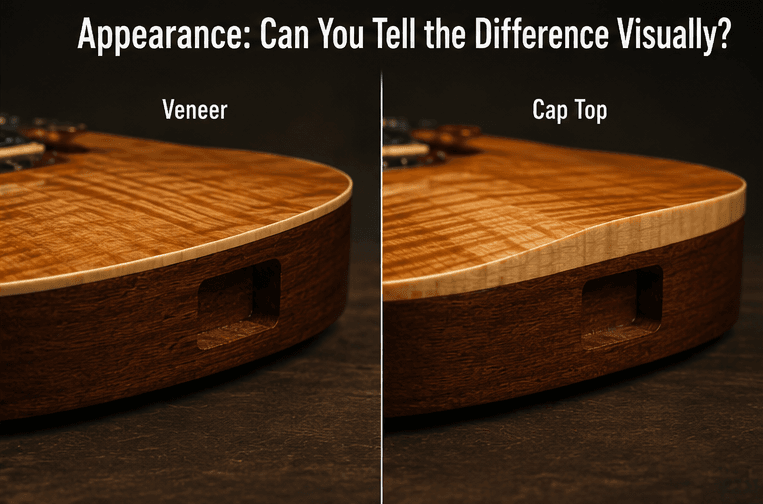
At first glance, it can be difficult to tell the difference between a veneer top and a cap top, especially from the front.
Both can show beautiful flame, quilt, burl, or exotic grain patterns. A well-finished veneer top can look very impressive in photos and on stage.
The difference becomes more noticeable when you look closely at certain details.
A cap top may show visible thickness at:
- The side edge of the body
- The arm contour
- The carved top area
- The pickup cavities
- The neck pocket
- Transparent finish edges
A veneer top usually appears only as a thin surface layer. On guitars with transparent finishes, you may not see a thick top layer along the side because the figured wood does not extend deeply into the body.
This is one reason why many veneer top guitars use binding, burst finishes, or darker edges. These design choices can help hide the transition between the veneer and the body wood underneath.
Which One Looks Better?
Both veneer tops and cap tops can look beautiful. The better choice depends on your goal.
A veneer top is excellent if your main priority is visual impact at a lower cost. It allows you to enjoy stunning wood figure without paying for a thick premium top.
A cap top is better if you want a more premium construction, more depth, and a higher-end feel. Figured maple caps, quilted maple caps, and carved tops often have a richer visual depth because the wood itself is thicker and more dimensional.
For luxury custom guitars, cap tops are generally considered more desirable.
For budget-friendly custom builds, veneer tops can still look fantastic.
Cost Difference: Why Is a Cap Top More Expensive?
A cap top is usually more expensive than a veneer top for several reasons.
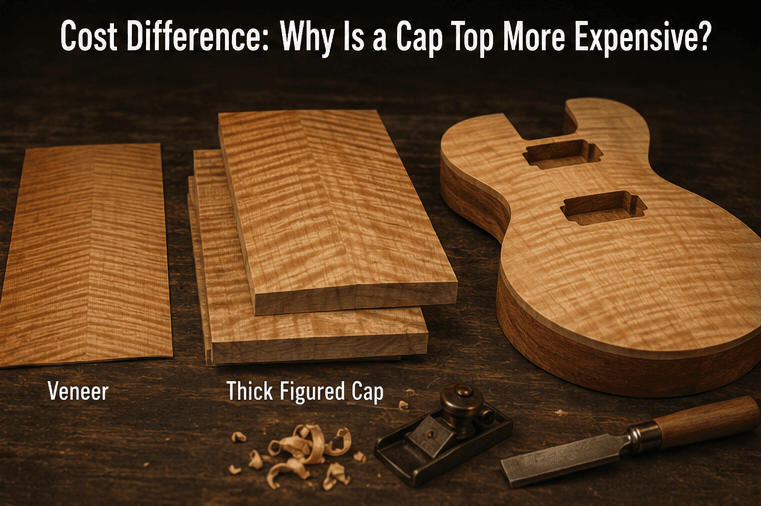
First, it uses more actual premium wood. Highly figured maple, quilted maple, burl, koa, or other exotic hardwoods can be expensive, especially in guitar-sized pieces.
Second, it requires more careful construction. The wood must be selected, joined, glued, carved, shaped, sanded, and finished properly.
Third, thicker tops may require more precise body routing and design planning, especially if the guitar has a carved top, binding, arm contour, or transparent finish.
A veneer top uses much less premium wood, which helps reduce cost. It is a smart option for players who want the look of figured wood without the price of a full cap.
Durability and Refinishing Considerations
A cap top is generally more flexible when it comes to sanding, shaping, and refinishing because there is more wood thickness to work with.
A veneer top requires more care. Since the veneer layer is very thin, aggressive sanding can easily damage or sand through the decorative surface. This is especially important if the guitar ever needs refinishing or repair work.
For normal use, both veneer and cap tops can be durable when finished properly. The finish protects the surface from moisture, scratches, and wear.
However, if you are planning a guitar that may be modified, refinished, heavily contoured, or repaired in the future, a cap top is usually the safer and more premium option.
Veneer Top Guitar: Pros and Cons
Pros of a veneer top
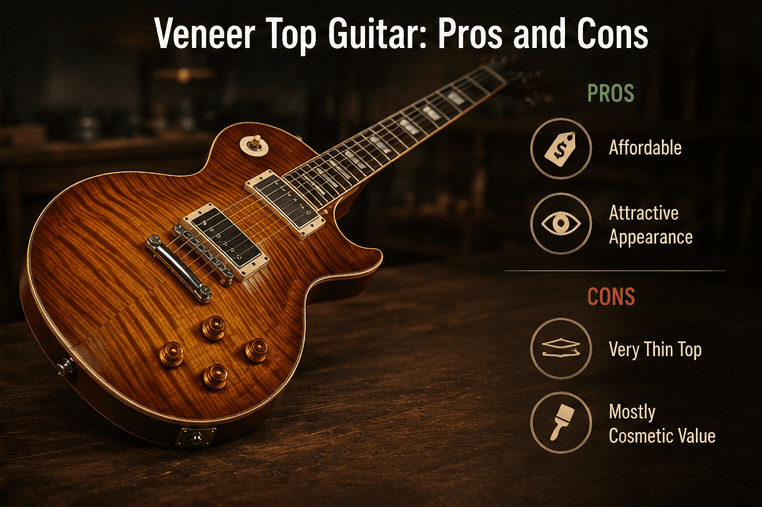
A veneer top gives you a beautiful appearance at a more affordable price. It is ideal for players who love flame maple, quilt maple, burl, or exotic wood looks but do not necessarily need the tonal or structural benefits of a thick top.
It also keeps the guitar closer to the sound of the main body wood. For example, if you like the balanced character of basswood or alder but want a more luxurious look, a veneer top is a practical choice.
Cons of a veneer top
The main drawback is that it is mostly cosmetic. It usually does not add meaningful tonal character. It is also less suitable for deep carving, heavy sanding, or refinishing because the top layer is thin.
A veneer top may also be considered less premium than a true cap top, especially among experienced guitar buyers.
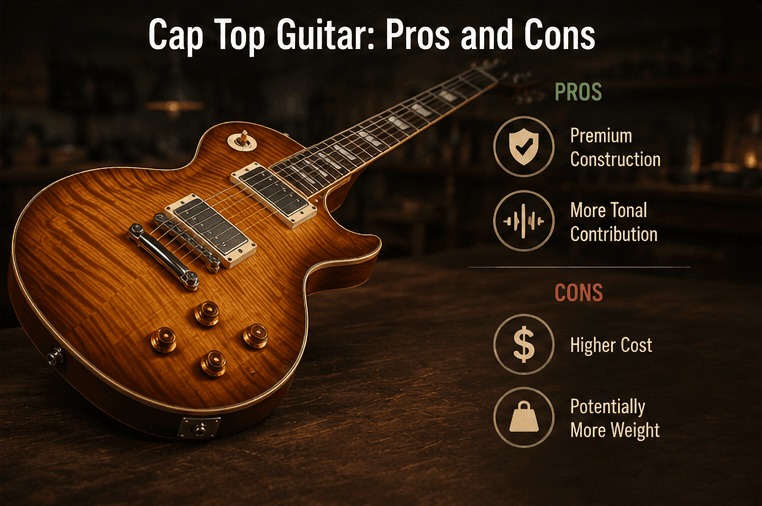
Cap Top Guitar: Pros and Cons
Pros of a cap top
A cap top offers a more premium construction and can contribute more to the guitar’s tone and response. It is ideal for players who want both visual beauty and a more substantial wood combination.
It also works well for carved-top guitars, transparent finishes, natural binding effects, and high-end custom designs.
A cap top can add brightness, clarity, snap, or tonal balance depending on the wood used.
Cons of a cap top
The main disadvantage is cost. A cap top requires more premium wood and more labor, which makes the guitar more expensive.
It can also affect weight depending on the wood used. For example, a thick maple cap may add brightness and definition, but it can also make the guitar heavier.
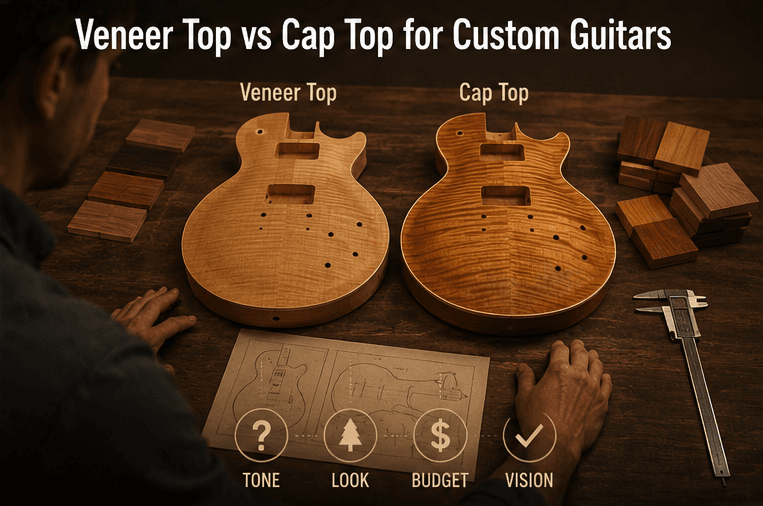
Veneer Top vs Cap Top for Custom Guitars
If you are ordering a custom guitar, the choice between veneer top and cap top should depend on your priorities.
Choose a veneer top if you want a beautiful custom look while keeping the cost more affordable. This is a great option for players who mainly care about appearance and want to invest more of their budget into pickups, hardware, or playability features.
Choose a cap top if you want a more premium build, more tonal contribution from the top wood, and a higher-end construction. This is the better choice if you are designing a guitar where the top wood is part of the instrument’s identity, not just the appearance.
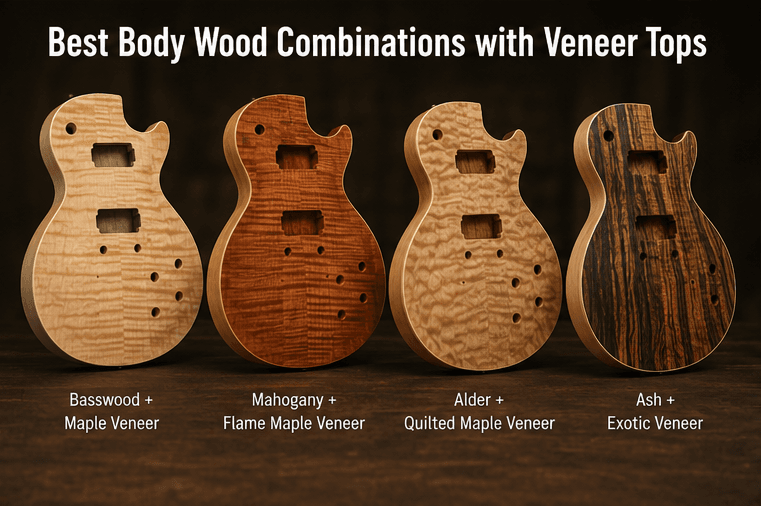
Best Body Wood Combinations with Veneer Tops
Because a veneer top is mostly decorative, the main body wood underneath will define most of the guitar’s natural character.
Here are some common combinations:
Basswood body with maple veneer
This is a popular modern combination. Basswood keeps the guitar lightweight, smooth, and balanced, while the maple veneer adds a premium figured look.
Best for:
- Modern rock
- Metal
- Shred
- Players who want comfort and visual appeal
Mahogany body with flame maple veneer
This gives the appearance of a classic maple-top guitar while keeping the warm, thick character of mahogany as the main tonal foundation.
Best for:
- Rock
- Blues
- Lead playing
- Warm, sustaining tones
Alder body with quilted maple veneer
Alder provides balanced tone and versatility, while quilted maple veneer creates a more eye-catching visual style.
Best for:
- Pop
- Rock
- Funk
- Versatile custom guitars
Ash body with exotic veneer
Ash already has strong grain, but adding an exotic veneer can create a unique boutique look.
Best for:
- Clean tones
- Country
- Funk
- Visual-focused builds
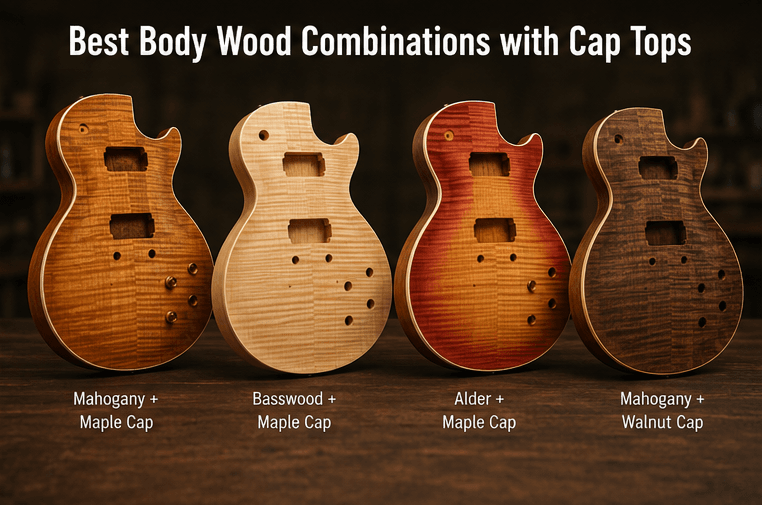
Best Body Wood Combinations with Cap Tops
Cap tops are more involved in the guitar’s structure, so the wood pairing matters more.
Mahogany body with maple cap
This is one of the most classic combinations. Mahogany provides warmth, sustain, and thickness, while maple adds brightness, attack, and clarity.
Best for:
- Classic rock
- Blues rock
- Hard rock
- Singing lead tones
Basswood body with maple cap
Basswood gives a smooth, balanced foundation, while maple adds more snap and definition. This combination works well for modern players who want precision without excessive brightness.
Best for:
- Metal
- Progressive rock
- Fusion
- Fast lead playing
Alder body with maple cap
Alder is already balanced and lively. A maple cap can add extra brightness and visual appeal without making the guitar too dark or heavy.
Best for:
- Pop
- Rock
- Session playing
- All-around versatility
Mahogany body with walnut cap
Walnut can add a rich, slightly darker, and tighter character. It also creates a refined natural look.
Best for:
- Jazz fusion
- Modern rock
- Boutique-style builds
- Warm but articulate tones
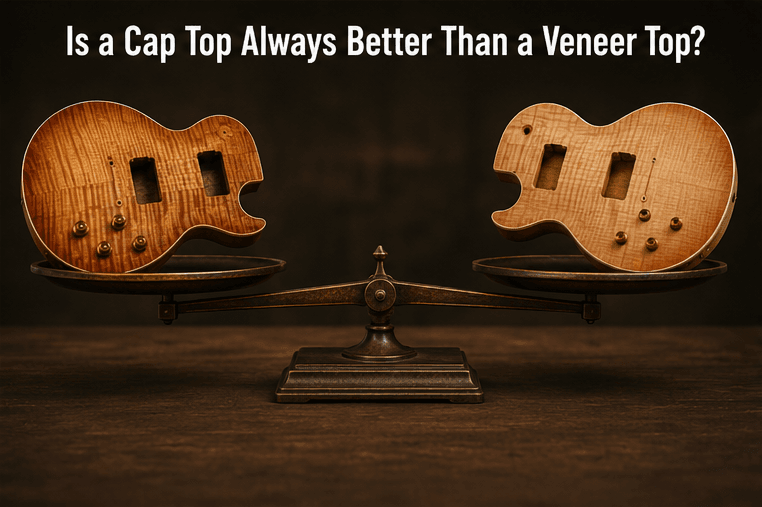
Is a Cap Top Always Better Than a Veneer Top?
Not always.
A cap top is generally more premium, but that does not automatically make it the better choice for every player.
If your priority is budget, appearance, and lightweight comfort, a veneer top can be an excellent choice. It allows you to get the look of a figured top while keeping the guitar affordable.
If your priority is premium construction, wood layering, carved-top design, and possible tonal influence, a cap top is the better option.
The right choice depends on what you value most.
A well-made veneer top guitar can still be a great instrument. A poorly designed cap top guitar is not automatically better just because it uses thicker wood.
Build quality matters.

Which One Should You Choose?
Here is a simple way to decide.
Choose a veneer top if:
- You want a beautiful figured wood look
- You want to keep the price more affordable
- You care more about appearance than top wood tone
- You prefer investing more budget into pickups or hardware
- You want a lighter and more cost-effective custom build
Choose a cap top if:
- You want a more premium guitar construction
- You want the top wood to be part of the guitar’s tonal design
- You want a carved top or high-end custom look
- You care about long-term value
- You want a more substantial wood combination
For many custom guitar buyers, a veneer top is a smart visual upgrade. For players seeking a premium build with stronger material value, a cap top is usually the better choice.
Common Misunderstandings About Veneer Tops and Cap Tops
“Veneer means low quality.”
Not necessarily. Veneer simply means the decorative wood layer is thin. A veneer top can still be used on a well-built guitar. The quality depends on the overall construction, finish, hardware, fretwork, and setup.
“Cap tops always sound better.”
Not always. A cap top may affect tone more than a veneer, but pickups, neck construction, bridge type, and build quality also matter greatly.
“If it looks like flame maple, it must be a maple cap.”
Not always. Many guitars use flame maple veneer to achieve the look of a figured maple top. The visual figure alone does not tell you whether it is a veneer or a cap.
“Veneer tops are only for cheap guitars.”
Veneer tops are more common on affordable guitars, but they can also be used intentionally on custom builds where the goal is visual design without adding extra weight or cost.
Final Thoughts: Veneer Top vs Cap Top Guitar
The difference between a veneer top and a cap top guitar comes down to thickness, purpose, cost, and construction.
A vener top is mainly a decorative layer. It gives the guitar a beautiful figured or exotic wood appearance while keeping the price more accessible.
A cap top is a thicker piece of wood that becomes part of the guitar’s structure. It can contribute more to tone, feel, visual depth, and overall value.
Neither option is automatically right or wrong. The best choice depends on your budget, playing style, tonal goals, and visual preferences.
If you want a stunning guitar that looks premium without a major price increase, a veneer top is a practical choice. If you want a more luxurious custom build with more material depth and potential tonal influence, a cap top is the better option.
In the end, the right top wood should match not only how you want your guitar to look, but also how you want it to feel, respond, and inspire you every time you play.