

Tonewoods & Materials
Understanding Guitar Tonewoods: How Different Woods Shape Your Sound
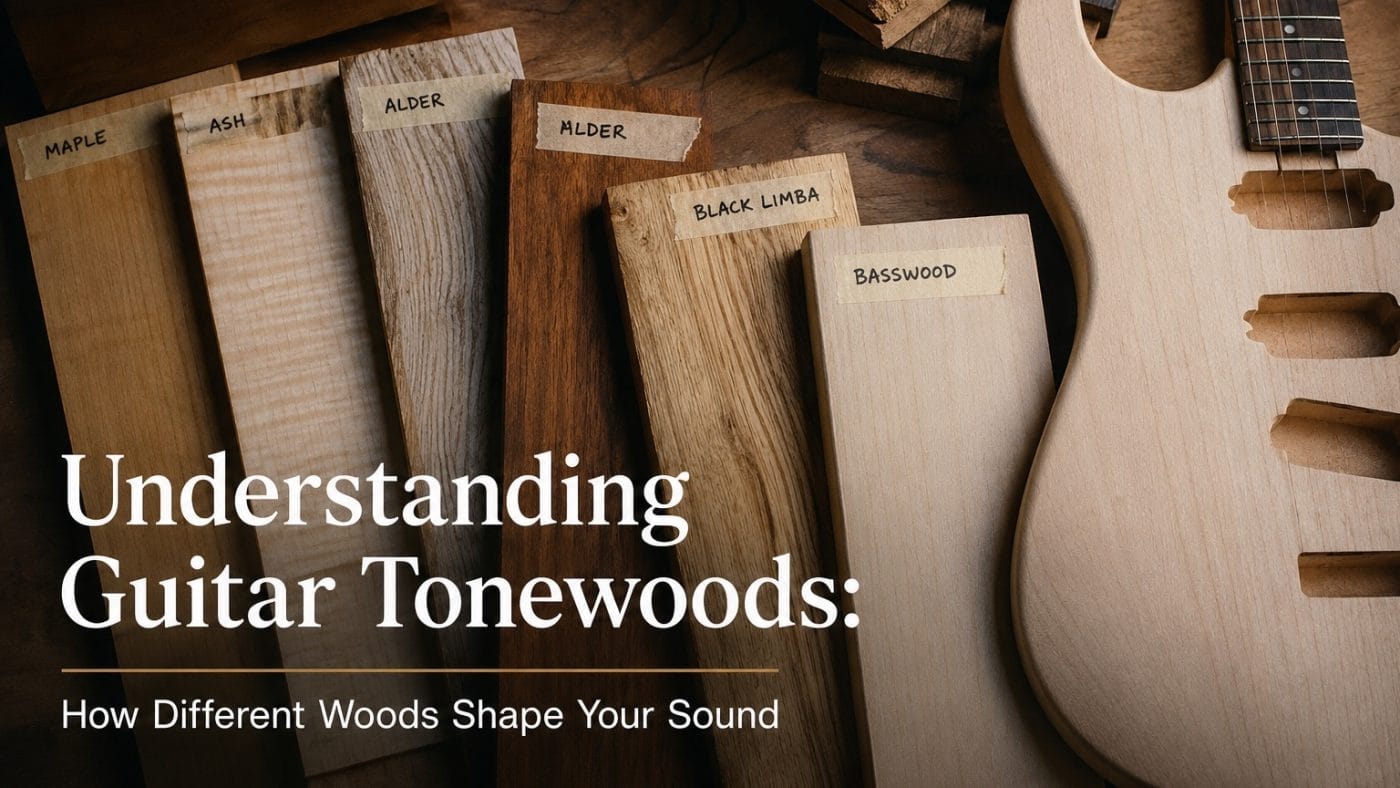
When it comes to electric guitars, pickups, hardware, and construction methods all play important roles—but tonewood remains one of the most influential factors in shaping how a guitar sounds, feels, and responds.
Each type of wood has its own density, grain structure, and resonance characteristics. These physical properties affect sustain, frequency emphasis, attack, and even how the instrument vibrates against your body.
In this guide, we’ll explore six widely used guitar tonewoods—Basswood, Mahogany, Alder, Ash, Black Limba, and Maple—and break down what makes each one unique.
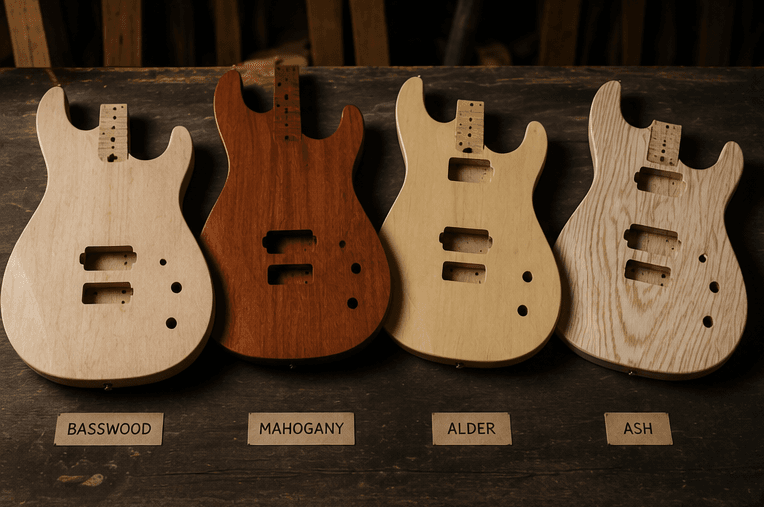
Basswood: Smooth, Balanced, and Player-Friendly
Basswood is a popular choice in modern electric guitars, especially in performance-oriented instruments designed for speed and precision.
Tonally, Basswood is known for its even frequency response, with a slight emphasis on the midrange. It doesn’t have exaggerated highs or deep booming lows, which makes it very predictable and easy to control. The natural compression of Basswood helps smooth out harsh transients, making fast playing feel more fluid and forgiving.
Because of its relatively soft density, Basswood is also lightweight, making it comfortable for long playing sessions. However, its subtle grain pattern means it is often paired with solid or opaque finishes rather than transparent ones.
Best suited for:
- High-gain playing
- Metal and shred
- Players who want consistency and control
Mahogany: Warm, Rich, and Full-Bodied
Mahogany is one of the most iconic tonewoods in guitar history, widely associated with classic designs from brands like Gibson.
Its tonal profile is characterized by strong low-end presence, warm mids, and smooth highs. Mahogany produces a thick, resonant sound with excellent sustain, making it ideal for expressive playing styles. Notes tend to “bloom” rather than snap, which gives the guitar a more vocal, singing quality.
Due to its density, Mahogany guitars are often heavier, but this contributes to their powerful resonance and sustain.
Best suited for:
- Blues, rock, and jazz
- Lead playing with sustain
- Players seeking warmth and depth
Alder: The Classic All-Rounder
Alder is one of the most widely used tonewoods in electric guitars, particularly in models from Fender such as the Stratocaster.
It is often described as balanced but lively, with clear highs, defined lows, and a slightly scooped midrange. Alder offers excellent note separation and articulation, making it versatile across many genres.
Its moderate weight and consistent grain structure also make it a favorite among manufacturers for reliability and ease of production.
Best suited for:
- Pop, rock, indie, and funk
- Clean and edge-of-breakup tones
- Players who want versatility
Ash: Bright, Resonant, and Visually Striking
Ash—particularly Swamp Ash—is prized for both its tone and appearance.
Tonally, Ash delivers bright highs, tight lows, and a slightly recessed midrange, resulting in a clear, open, and airy sound. It has strong projection and excellent dynamics, meaning it responds well to picking intensity and playing nuances.
One of Ash’s standout features is its dramatic grain pattern, which looks stunning under transparent or natural finishes.
Best suited for:
- Funk, country, and clean styles
- Players who prioritize clarity and dynamics
- Aesthetic-focused builds
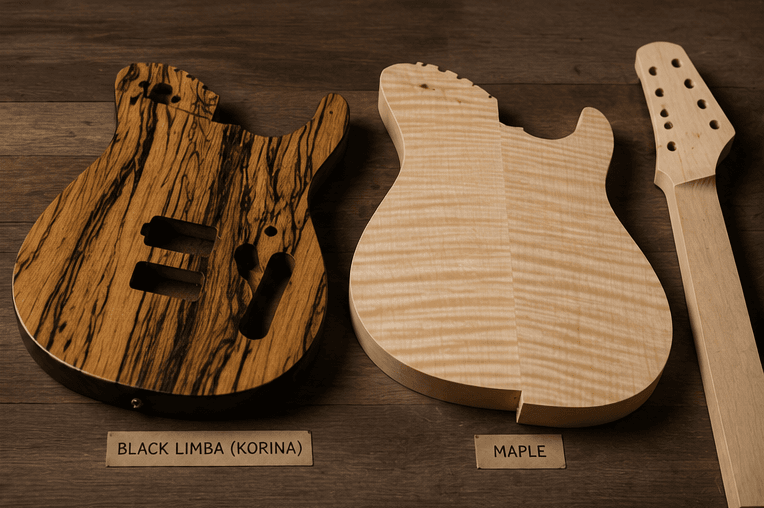
Black Limba (Korina): Vintage Character with Modern Clarity
Black Limba—also known as Korina—is a rarer tonewood with a unique tonal identity. It gained popularity through vintage instruments and has seen a resurgence in boutique and custom guitars.
Its tonal characteristics are often compared to Mahogany, but with a twist. Black Limba offers warm lows and rich mids, combined with a slightly brighter and more open top end. This gives it a more “alive” and responsive feel compared to the darker, thicker nature of Mahogany.
Visually, Black Limba features striking, irregular grain patterns with dark streaks, making each piece visually distinctive.
Best suited for:
- Classic rock and blues
- Players seeking warmth with added clarity
- Boutique and high-end instruments
Maple: Bright, Fast, and Highly Articulate
Maple is one of the hardest and most dense woods used in guitar construction. It is commonly used for necks and top caps rather than full bodies, though it can be used in both roles.
Tonally, Maple is known for its brightness, clarity, and fast attack. It enhances note definition and helps individual notes stand out in a mix. When paired with warmer woods like Mahogany, Maple adds articulation and balance, preventing the tone from becoming too dark.
Maple is also highly valued for its visual appeal. Figured varieties such as flame or quilted Maple are often used in high-end guitars.
Best suited for:
- Players who want clarity and precision
- Styles requiring note definition
- Enhancing tonal balance in multi-wood constructions
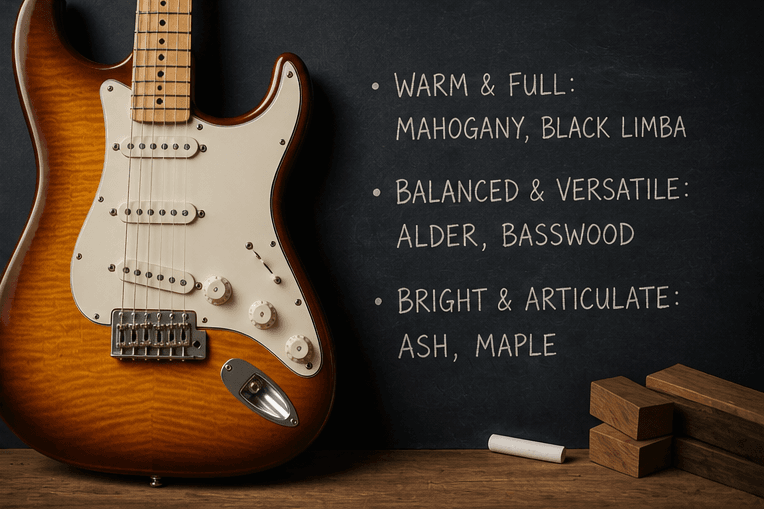
Choosing the Right Tonewood
While tonewood plays a significant role, it’s important to remember that it works in combination with pickups, hardware, and playing technique. Still, understanding wood characteristics can help guide your decisions.
Here’s a simplified way to think about it:
- Warm and full: Mahogany, Black Limba
- Balanced and versatile: Alder, Basswood
- Bright and articulate: Ash, Maple
Ultimately, the “best” wood depends on your playing style, tonal preference, and even aesthetic taste.
Final Thoughts
Tonewood is not just a technical detail—it’s part of the instrument’s identity. From the smooth neutrality of Basswood to the rich warmth of Mahogany and the brilliance of Maple, each wood brings its own voice to the guitar.
Whether you’re choosing your next instrument or building a brand around guitars, understanding these differences allows you to make more intentional decisions—and ultimately, find a sound that truly feels like your own.