

Guitar Care & Maintenance
How to Clean Your Electric Guitar- Complete Step-by-Step Guide
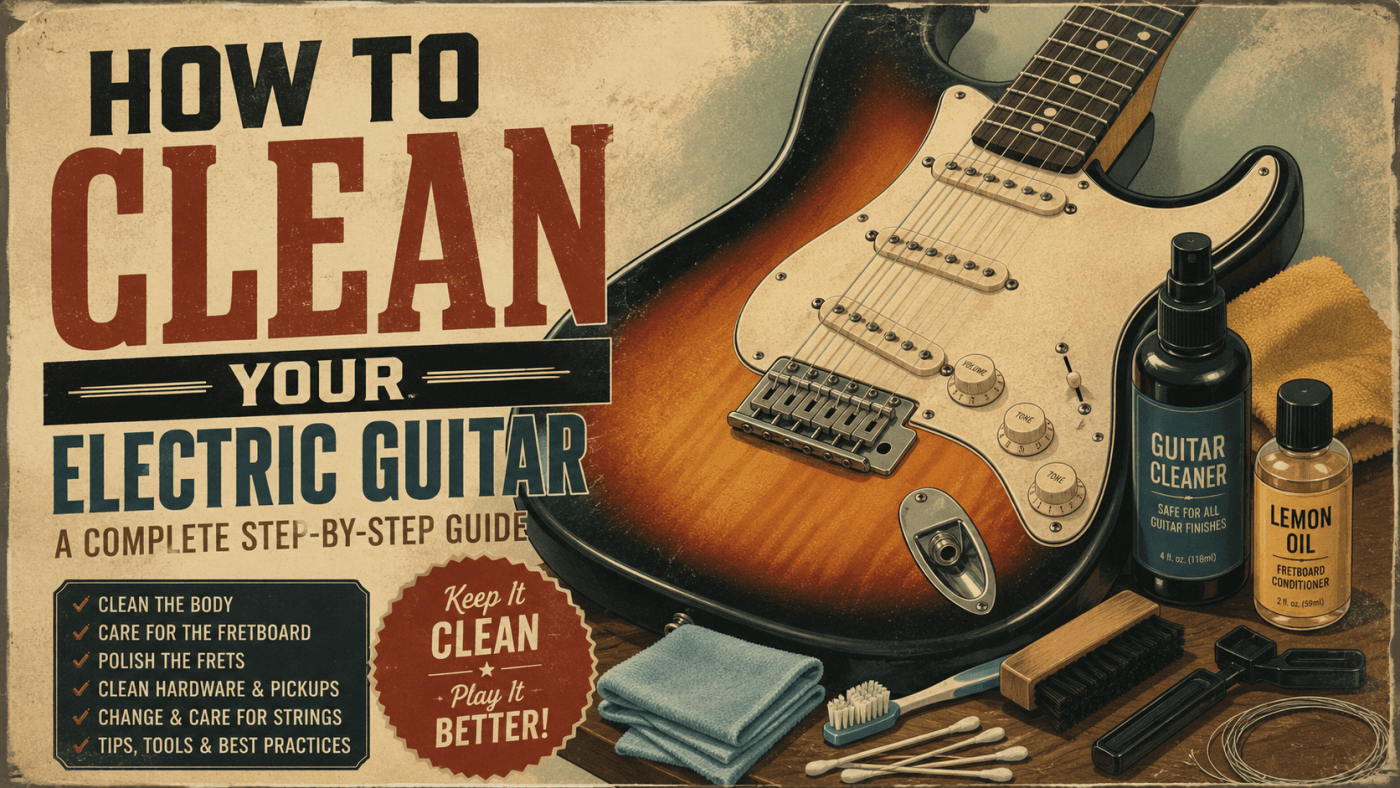
Keeping your electric guitar clean is one of the easiest ways to protect its tone, playability, appearance, and long-term value. Whether you play every day, perform live, record in a studio, or simply keep your guitar at home, dust, sweat, skin oil, fingerprints, and grime slowly build up on the instrument over time.
A clean electric guitar not only looks better. It also feels smoother, stays more comfortable to play, and can help prevent issues such as dirty frets, sticky neck feel, corroded strings, scratchy hardware, and buildup around pickups and bridge parts.
The good news is that cleaning an electric guitar is not difficult. With the right tools, careful technique, and a simple routine, you can keep your guitar in excellent condition without damaging the finish, fretboard, electronics, or hardware.
In this complete guide, we will walk through how to clean your electric guitar properly, including the body, neck, fretboard, frets, pickups, bridge, hardware, strings, and hard-to-reach areas.
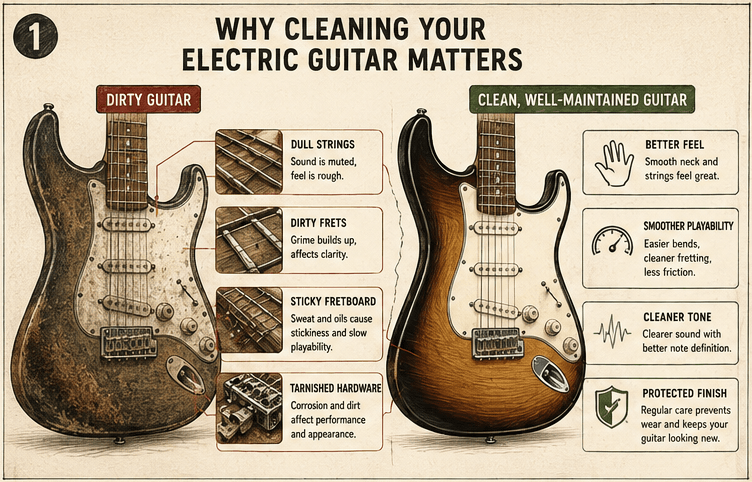
Why Cleaning Your Electric Guitar Matters
Many players only clean their guitar when it starts to look dirty. However, regular cleaning is more than just cosmetic.
Every time you play, your hands leave behind sweat, oil, dirt, and moisture. Over time, this buildup can affect the way your guitar feels and performs. Strings become dull. Frets lose their shine. The fretboard becomes sticky or dry. Hardware can begin to tarnish or corrode. Dust can collect around pickups, bridge saddles, switches, and control knobs.
Cleaning your guitar helps protect:
- The guitar finish
- The fretboard surface
- Frets and hardware
- Strings
- Pickup covers and screws
- Bridge and saddles
- Tuning machines
- Overall playability
A well-maintained guitar feels better in your hands and encourages you to play more often.
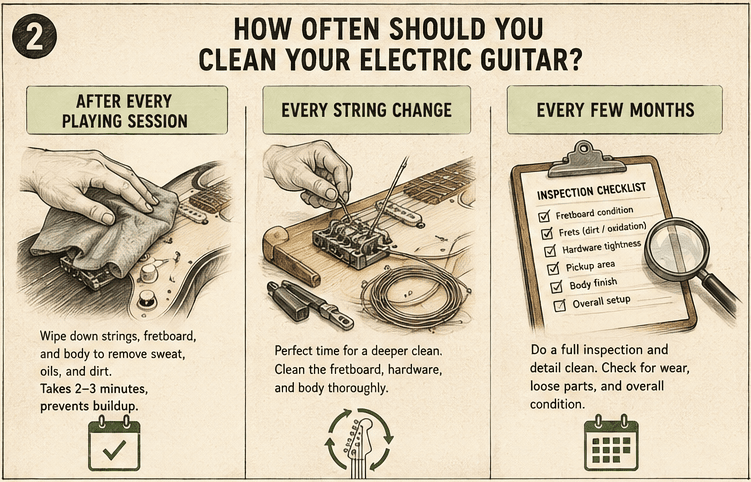
How Often Should You Clean Your Electric Guitar?
How often you should clean your electric guitar depends on how much you play, how much you sweat, and where the guitar is stored.
If you play often, you should do a quick wipe-down after every session. This only takes one or two minutes and can make a big difference. For deeper cleaning, many players clean their guitar whenever they change strings.
A good routine looks like this:
After every playing session: wipe the strings, neck, and body with a clean microfiber cloth.
Every string change: clean the fretboard, frets, body, bridge, and hardware more thoroughly.
Every few months: inspect the guitar for buildup, loose hardware, dirty electronics, fretboard dryness, or signs of corrosion.
For players who perform live or play in humid environments, more frequent cleaning may be necessary.
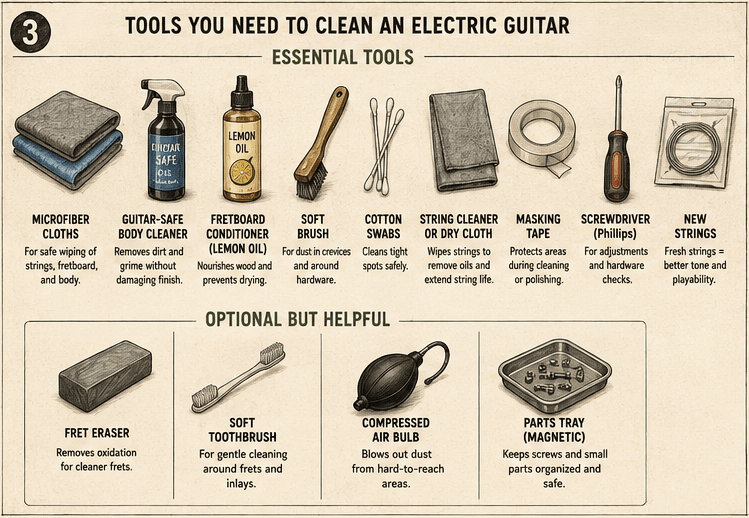
Tools You Need to Clean an Electric Guitar
Before you begin, prepare the right tools. Using the wrong products can damage the guitar finish, dry out the fretboard, or scratch metal parts.
Recommended cleaning tools
- Clean microfiber cloths
- Soft guitar polishing cloth
- Guitar-safe body cleaner
- Fretboard conditioner or lemon oil for unfinished rosewood, ebony, or similar boards
- Soft brush or small detailing brush
- Cotton swabs
- String cleaner or dry cloth
- Guitar polish suitable for your finish
- Masking tape for fret cleaning
- Small screwdriver if needed
- New set of strings
Optional tools
- Fret polishing cloth
- Fret erasers
- Low-tack tape
- Compressed air or hand air blower
- Soft toothbrush for bridge cleaning
- Small parts tray
- Naphtha lighter fluid for professional-style cleaning, used carefully and only when appropriate
For most players, a microfiber cloth, guitar-safe cleaner, fretboard conditioner, and soft brush are enough.
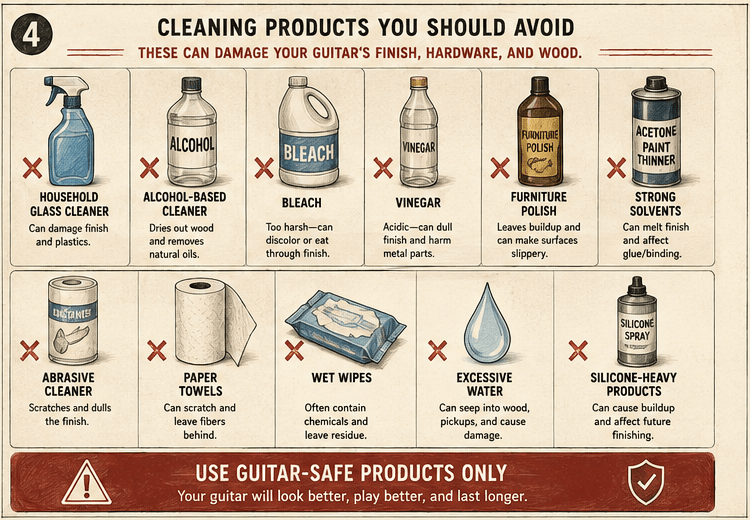
Cleaning Products You Should Avoid
Not every household cleaner is safe for guitars. Some products can damage finishes, leave residue, or dry out wood.
Avoid using:
- Household glass cleaner
- Alcohol-based cleaners
- Bleach
- Vinegar
- Furniture polish
- Strong solvents
- Abrasive cleaners
- Paper towels
- Wet wipes
- Excessive water
- Silicone-heavy products if you may refinish the guitar later
Paper towels may seem harmless, but they can create fine scratches on glossy finishes. Household cleaners may react badly with certain guitar finishes, especially nitrocellulose lacquer.
Always use products made for guitars or very mild methods recommended for musical instruments.
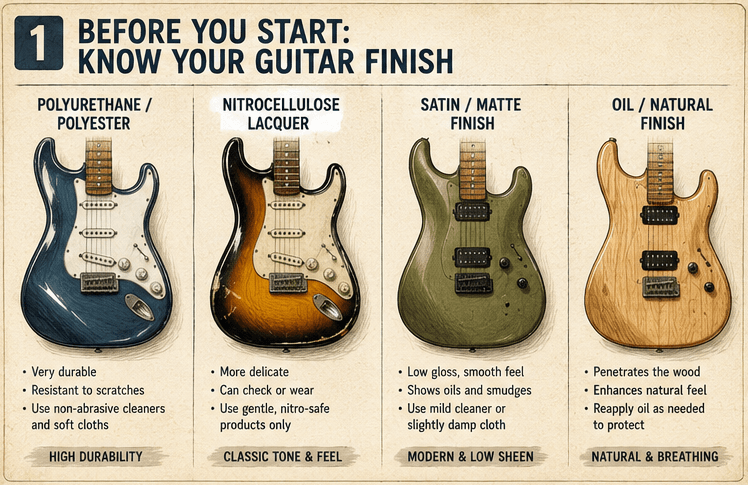
Before You Start: Know Your Guitar Finish
Before cleaning the body, it is important to know what kind of finish your guitar has.
Different finishes require different levels of care.
Polyurethane and polyester finishes
These are common on many modern electric guitars. They are durable, glossy, and more resistant to cleaning products. Most guitar-safe cleaners work well on poly finishes.
Nitrocellulose lacquer finishes
Nitro finishes are thinner, more delicate, and more reactive. They can be damaged by aggressive cleaners, rubber stands, alcohol, and certain chemicals. Use only nitro-safe products and avoid heavy pressure.
Satin and matte finishes
Satin and matte finishes should not be polished aggressively. Polishing can create shiny spots and uneven areas. Use a dry or slightly damp microfiber cloth and avoid gloss polish.
Oil or natural finishes
Natural or oil-finished guitars may need special care. Avoid standard polish unless the product is designed for that type of finish.
When in doubt, use the safest method: a clean dry microfiber cloth first.
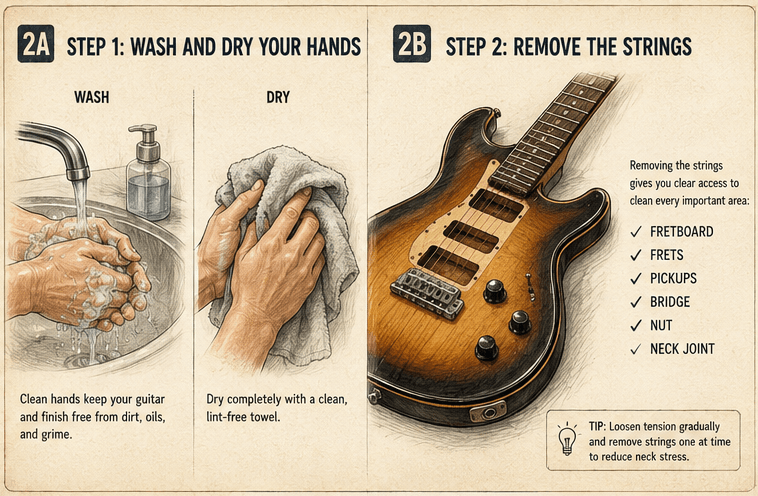
Step 1: Wash and Dry Your Hands
Before cleaning your guitar, wash your hands and dry them completely. This prevents adding more oil, dirt, or moisture to the instrument while you work.
It may sound simple, but clean hands make a noticeable difference. This is also a good habit before playing, especially if you want your strings and fretboard to last longer.
Step 2: Remove the Strings
For a deep clean, remove the strings. This gives you access to the fretboard, frets, pickups, bridge, and areas that are normally difficult to reach.
If your guitar has a fixed bridge, removing all strings at once is usually simple. If your guitar has a floating tremolo system, removing all strings can change the bridge position and make restringing more complicated. In that case, you may prefer to replace and clean one string area at a time, or place a support block under the bridge before removing the strings.
If you are new to guitar maintenance, take a quick photo of the bridge and string path before removing the strings. This can help when restringing.
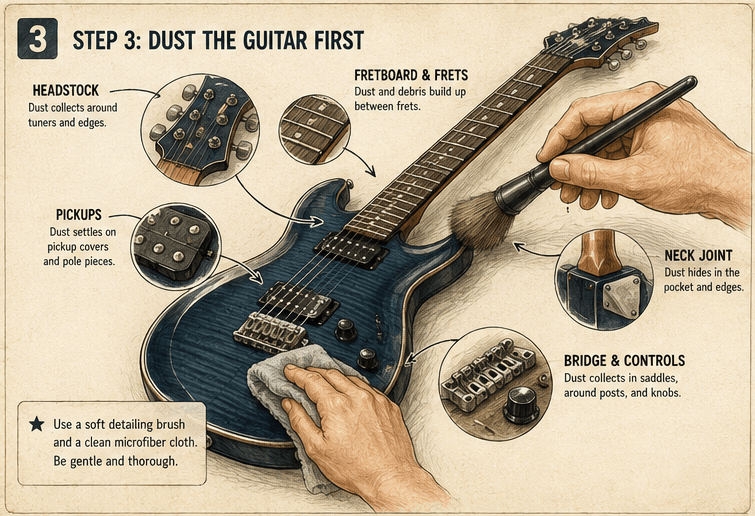
Step 3: Dust the Guitar First
Before applying any cleaner, remove loose dust.
Use a clean dry microfiber cloth or soft brush to gently dust the guitar body, headstock, pickups, bridge area, and control area.
Dust can act like a fine abrasive if you rub it into the finish with pressure. Removing it first helps prevent scratches.
Pay attention to:
- Around pickups
- Bridge saddles
- Pickup rings
- Control knobs
- Toggle switch
- Tuning machines
- Neck joint
- Headstock edges
A soft detailing brush is useful for areas where cloth cannot reach.
Step 4: Clean the Guitar Body
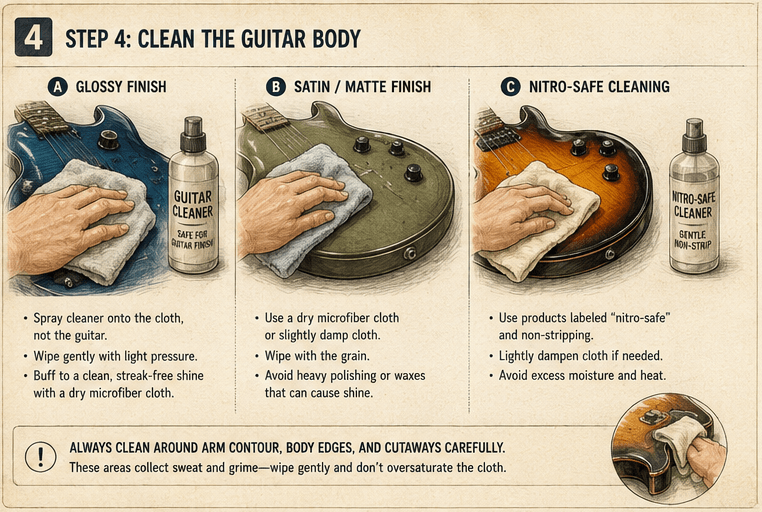
The body is usually the most visible part of the guitar, and it collects fingerprints, arm sweat, dust, and smudges.
For glossy finishes
Use a clean microfiber cloth. If dry wiping is not enough, apply a small amount of guitar-safe cleaner to the cloth, not directly onto the guitar.
Wipe gently in circular or straight motions. Do not use excessive pressure. After cleaning, use a dry cloth to buff away any remaining residue.
For satin or matte finishes
Use a dry microfiber cloth or a slightly damp cloth if needed. Avoid polish because it can make the finish shiny in certain spots.
Do not rub aggressively. Satin finishes can become uneven if polished too hard.
For nitro finishes
Use only nitro-safe guitar cleaner. Avoid alcohol, strong solvents, and silicone-heavy products. Clean gently and do not leave cleaner sitting on the surface.
Around edges and contours
Sweat often builds up where your forearm rests. Clean this area carefully, especially if you play often or perform live.
Step 5: Clean the Fretboard
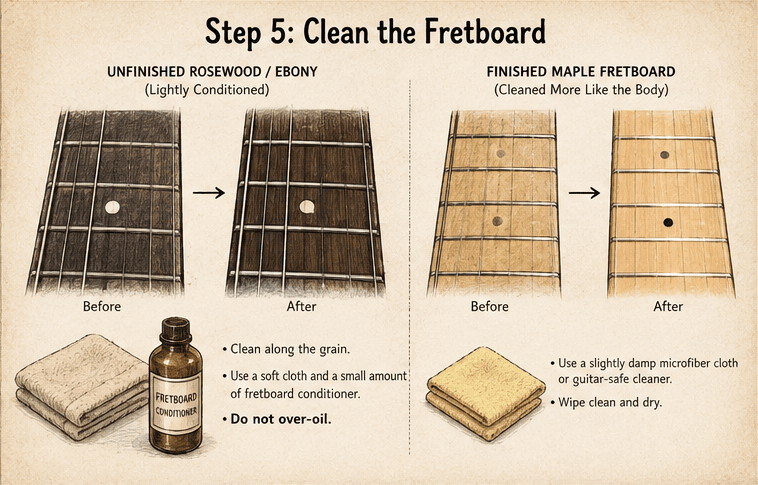
The fretboard is one of the most important areas to clean because it directly affects playing feel. Dirt, sweat, and skin buildup can collect around frets and make the guitar feel sticky or rough.
How you clean the fretboard depends on the material and whether it is finished or unfinished.
Cleaning Rosewood, Ebony, Pau Ferro, and Other Unfinished Fretboards
Unfinished fretboards can collect grime and may become dry over time. These boards can benefit from occasional conditioning.
How to clean an unfinished fretboard
First, remove loose dirt with a dry microfiber cloth. Then use a soft cloth or slightly damp cloth to clean along the grain. For stubborn buildup near frets, use a soft brush or cotton swab.
If the fretboard is very dirty, use a small amount of guitar-safe fretboard cleaner.
After cleaning, apply a small amount of fretboard conditioner or lemon oil made for guitars. Let it sit briefly, then wipe off all excess oil.
Important: do not over-oil the fretboard. Too much oil can soften wood, attract dirt, and create residue. A light treatment a few times per year is usually enough for most players.
Cleaning Maple Fretboards
Maple fretboards are often finished, especially on many modern electric guitars. A finished maple board should be cleaned more like the guitar body.
Use a dry microfiber cloth or a small amount of guitar-safe cleaner. Avoid soaking the fretboard with oil. Lemon oil is generally not needed for finished maple fretboards.
If your maple fretboard is unfinished or lightly oiled, follow the manufacturer’s recommendations and use very mild cleaning.
Step 6: Clean and Polish the Frets
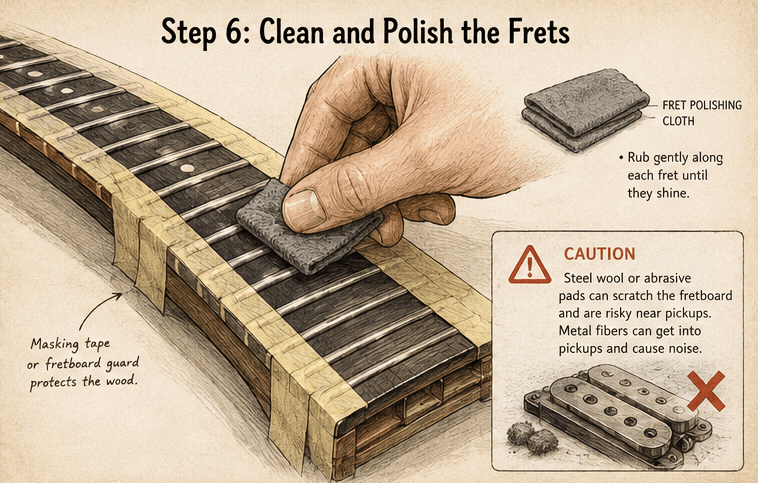
Frets can become dull due to oxidation, sweat, and string contact. Clean frets feel smoother and make bends easier.
Before polishing frets, protect the fretboard. Use low-tack masking tape between the frets or use a fretboard guard.
Simple fret cleaning method
Use a dedicated fret polishing cloth or fret eraser. Gently rub each fret until it becomes clean and shiny. Then wipe away any residue with a microfiber cloth.
Avoid using steel wool unless you know exactly what you are doing. Steel wool particles can stick to pickups because they are magnetic. These tiny particles can be difficult to remove and may cause problems. If you use steel wool, fully protect the pickups and clean carefully afterward.
For most players, fret polishing cloths or fret erasers are safer and cleaner.
Step 7: Clean the Pickups
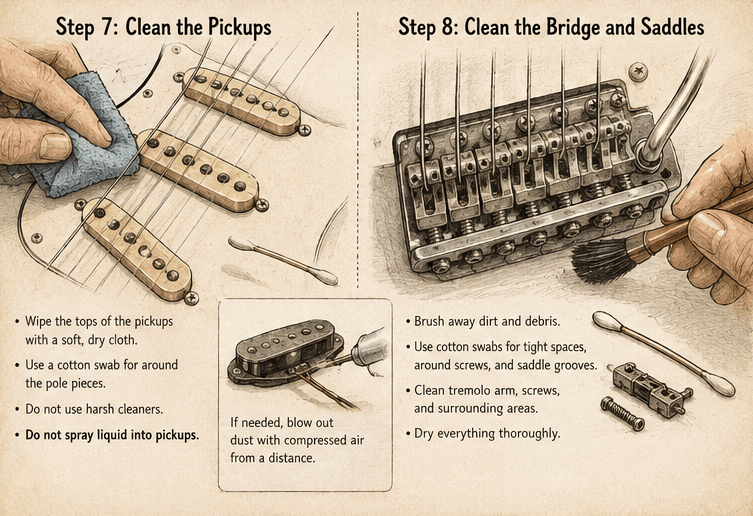
Pickups collect dust, sweat, and grime. They should be cleaned gently because they are connected to the guitar’s electronics.
Use a dry microfiber cloth or soft brush. For dust around pickup screws or pole pieces, use a cotton swab or detailing brush.
Avoid spraying cleaner directly onto pickups. Moisture can enter the pickup cavity or affect metal parts.
For metal pickup covers, gently wipe with a dry cloth. If there is tarnish, use a guitar-safe metal cleaner carefully and avoid getting it on the finish or plastic parts.
Step 8: Clean the Bridge and Saddles
The bridge is one of the dirtiest parts of many electric guitars. Sweat, dust, string residue, and hand oil often build up around saddles and screws.
Use a soft brush, cotton swabs, and microfiber cloth to clean around the bridge.
For fixed bridges, clean around:
- Saddles
- Bridge posts
- String holes
- Screws
- Tailpiece
- Intonation screws
For tremolo bridges, clean around:
- Saddles
- Tremolo plate
- Springs if accessible
- Fine tuners if present
- Locking parts
- Tremolo arm socket
Avoid using too much liquid near the bridge because moisture can reach screw holes or unfinished wood.
If hardware is heavily corroded, cleaning may not fully restore it. In severe cases, replacement parts may be needed.
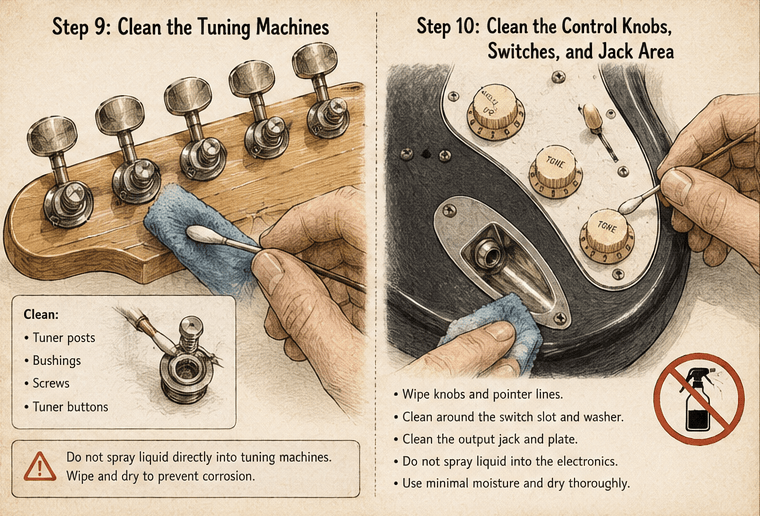
Step 9: Clean the Tuning Machines
Tuning machines collect dust and fingerprints, especially on the headstock.
Wipe the tuners with a dry microfiber cloth. Use a cotton swab around posts and buttons. If there is grime around the string posts, clean it before installing new strings.
Do not use excessive oil or lubricant unless the tuner requires it. Many modern sealed tuners do not need regular lubrication.
Also check whether tuner screws are loose. If they are, gently tighten them, but do not overtighten.
Step 10: Clean the Control Knobs, Switches, and Jack Area
The control area often collects dust and sweat, especially around knobs and switches.
Use a dry cloth and soft brush around:
- Volume knobs
- Tone knobs
- Pickup selector switch
- Output jack
- Toggle switch washer
- Control plate edges
If a knob is very dirty, you may remove it carefully and clean underneath. Be gentle. Some knobs pull off easily, while others have small set screws.
Avoid spraying cleaner into switches, pots, or the output jack unless you are using a proper electronics contact cleaner and know how to apply it. General guitar polish should never be sprayed into electronics.
If your controls are scratchy or noisy, that may require electronics contact cleaner or professional servicing.
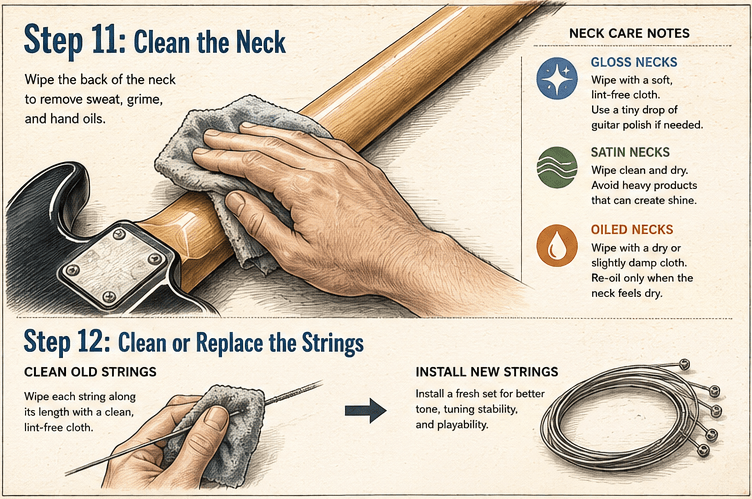
Step 11: Clean the Neck
The back of the neck affects playing comfort more than almost any other area. A sticky neck can make the guitar feel slower and less comfortable.
Gloss necks
Use a microfiber cloth and guitar-safe cleaner. Wipe away sweat and fingerprints. Buff gently.
Satin necks
Use a dry cloth or slightly damp microfiber cloth. Avoid gloss polish, which may create shiny patches.
Oiled necks
Use the correct care method for that specific finish. Some oiled necks may need occasional conditioning, but do not apply random oils without knowing the finish type.
After cleaning, the neck should feel smooth, dry, and comfortable.
Step 12: Clean or Replace the Strings
Old strings can make even a clean guitar feel dull. If your strings are rusty, rough, discolored, or sound lifeless, replace them.
If the strings are still usable, wipe each string with a clean cloth after playing. You can also use a guitar string cleaner if desired.
However, during a deep cleaning session, it is usually best to install a fresh set of strings. New strings make the guitar sound brighter and feel cleaner.
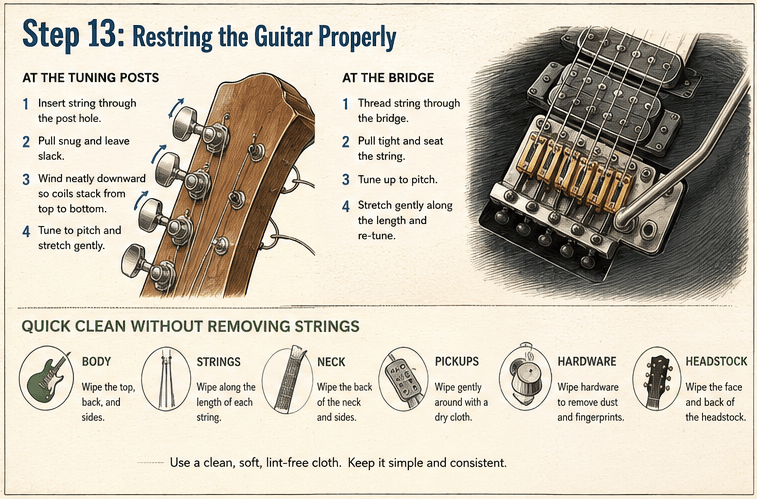
Step 13: Restring the Guitar Properly
After cleaning the body, fretboard, frets, bridge, and hardware, install new strings.
Make sure the strings are seated correctly at the bridge and nut. Wind them neatly around the tuning posts. Stretch the strings gently after tuning to help them settle.
If your guitar has a locking tremolo, follow the correct restringing process for that bridge type.
After restringing, tune the guitar and check:
- String height
- Tuning stability
- Intonation
- Neck relief
- Bridge position
- Nut slots
- Pickup height
A deep clean is a good time to inspect the overall setup.

How to Clean an Electric Guitar Without Removing Strings
Sometimes you may want to clean your guitar quickly without changing strings.
You can still do a basic cleaning:
- Wipe the body with a microfiber cloth.
- Wipe the strings one by one.
- Clean the back of the neck.
- Use a soft brush around pickups and bridge.
- Wipe fingerprints from hardware.
- Clean the headstock and tuners.
You will not be able to clean the fretboard as deeply, but this routine helps keep the guitar fresh between string changes.
How to Clean a Glossy Electric Guitar
Glossy guitars show fingerprints and smudges easily, but they are usually simple to clean.
Use a microfiber cloth and guitar-safe polish. Apply the cleaner to the cloth rather than spraying directly onto the guitar. Wipe gently, then buff with a dry cloth.
Avoid circular rubbing with too much pressure if dust is present. Always remove dust first.
Gloss finishes can look excellent when polished correctly, but over-polishing is unnecessary.
How to Clean a Satin or Matte Electric Guitar
Satin and matte guitars require a different approach.
Do not use regular guitar polish unless it is specifically safe for matte finishes. Polishing a matte guitar can create shiny spots that are difficult or impossible to reverse.
Use a dry microfiber cloth for regular cleaning. For stubborn marks, use a slightly damp cloth and dry immediately.
The goal is to clean the surface, not buff it to a shine.
How to Clean a Guitar with a Nitro Finish
Nitrocellulose lacquer finishes are delicate and require special care.
Use only nitro-safe cleaning products. Avoid alcohol, household cleaners, strong solvents, and aggressive polishing. Do not leave the guitar in contact with rubber, vinyl, or certain plastics for long periods, as they may react with nitro finishes.
For regular care, a soft dry cloth is often enough.
Nitro finishes age naturally and may develop checking, wear, and color changes over time. Many players appreciate this, but it also means the finish needs gentler care.
How to Clean Gold Hardware
Gold hardware looks beautiful but can wear more easily than chrome or nickel hardware. The gold plating can be thin, so aggressive polishing may remove the finish.
Use a soft dry microfiber cloth. Avoid abrasive metal polish. If needed, use a very mild guitar-safe cleaner and wipe gently.
Do not scrub gold hardware. Prevention is better than restoration. Wipe it down after playing to remove sweat and fingerprints.
How to Remove Stickiness from a Guitar Neck
A sticky neck can be caused by sweat, dirt, glossy finish friction, or old residue.
Start with a clean microfiber cloth. If needed, use a small amount of guitar-safe cleaner. For satin necks, avoid polish. For gloss necks, gentle cleaning and buffing may help.
If the neck still feels sticky, the issue may be the finish itself rather than dirt. Some players prefer satin necks because they feel faster and less sticky.
Do not sand the neck unless you understand the risks. Sanding can permanently alter the finish and reduce resale value.
How to Remove Grime from the Fretboard
Fretboard grime often builds up next to frets. This is especially common on rosewood, ebony, and pau ferro fretboards.
Use a soft cloth, cotton swabs, or a soft brush. Work carefully along the fret edges. If needed, apply a small amount of fretboard cleaner.
After cleaning an unfinished fretboard, apply a very light amount of conditioner and wipe away all excess.
Avoid soaking the wood. Too much liquid can cause problems.
Should You Use Lemon Oil on a Guitar Fretboard?
Lemon oil can be useful, but only in the right situation.
Use guitar-specific lemon oil or fretboard conditioner on unfinished rosewood, ebony, pau ferro, or similar fretboards. Use it sparingly.
Do not use lemon oil on finished maple fretboards. Do not use furniture lemon oil. Do not over-apply it.
A small amount a few times per year is usually enough. If the fretboard already looks healthy, you may not need oil at all.
Should You Use Water to Clean a Guitar?
Water should be used very carefully.
A slightly damp microfiber cloth can be safe for some cleaning tasks, but the cloth should not be wet. Water should never be allowed to pool around frets, pickups, bridge screws, unfinished wood, electronics, or cracks in the finish.
Always dry the area immediately after using a damp cloth.
For most cleaning tasks, a dry cloth or guitar-safe cleaner is better.
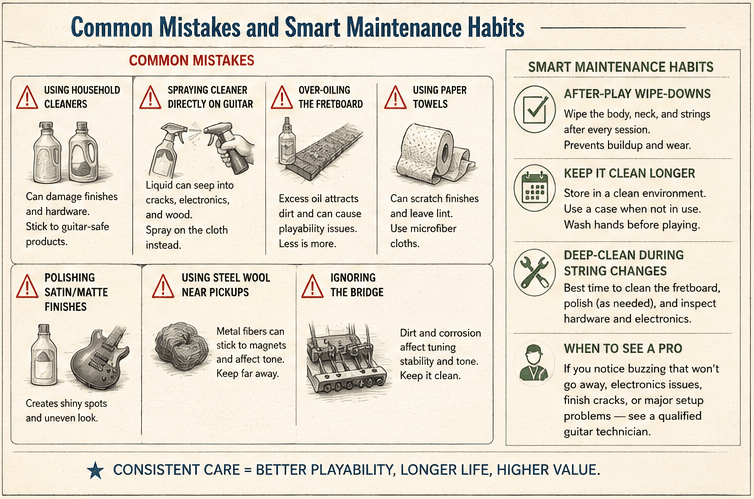
Common Mistakes When Cleaning an Electric Guitar
Cleaning a guitar is simple, but mistakes can cause damage.
Using household cleaners
Household cleaners may contain chemicals that damage guitar finishes or leave residue.
Spraying cleaner directly onto the guitar
Cleaner can run into pickups, electronics, bridge holes, or seams. Always apply cleaner to the cloth first.
Over-oiling the fretboard
Too much oil can create residue, attract dirt, and affect the wood.
Using paper towels
Paper towels can create fine scratches on glossy finishes.
Scrubbing gold hardware
Gold plating can wear off if cleaned aggressively.
Polishing satin finishes
Polish can create shiny spots on matte or satin guitars.
Using steel wool near pickups
Steel wool particles are magnetic and can stick to pickups.
Ignoring the bridge
The bridge collects sweat and grime and should be cleaned regularly.
Leaving old strings on after deep cleaning
Old strings can make a freshly cleaned guitar still feel dirty and dull.
Quick Cleaning Routine After Playing
A quick routine can prevent most buildup.
After each session:
- Wipe the strings.
- Wipe the fretboard area.
- Wipe the back of the neck.
- Wipe the body where your arm rests.
- Wipe fingerprints from hardware.
- Store the guitar properly.
This takes less than two minutes and helps your strings, finish, and hardware last longer.
Deep Cleaning Routine During String Changes
When changing strings, use the opportunity to do a deeper clean.
A good deep cleaning routine:
- Remove the strings.
- Dust the entire guitar.
- Clean the body.
- Clean the fretboard.
- Polish the frets if needed.
- Clean pickups and bridge.
- Wipe tuning machines.
- Clean controls and jack area.
- Condition unfinished fretboard if needed.
- Install new strings.
- Tune and check setup.
This routine keeps your electric guitar looking, feeling, and performing its best.
How to Keep Your Guitar Clean Longer
Cleaning is easier when you prevent buildup.
To keep your guitar cleaner:
- Wash your hands before playing
- Wipe the guitar after each session
- Store it in a case or covered stand
- Avoid leaving it in humid or dusty areas
- Change strings regularly
- Use a clean strap
- Avoid eating while playing
- Keep drinks away from the guitar
- Use a proper guitar stand
- Maintain stable humidity
Small habits make a big difference over time.
When Should You Take Your Guitar to a Professional?
Basic cleaning can be done at home, but some problems are better handled by a guitar technician.
Consider professional help if:
- The electronics are noisy
- The bridge is heavily rusted
- Frets are deeply worn
- The fretboard is cracked
- The finish is damaged
- Hardware screws are stripped
- The guitar has tuning stability problems
- The neck needs adjustment
- You are unsure about cleaning a valuable or vintage guitar
A professional setup and cleaning can make an older guitar feel much better.
Final Thoughts: A Clean Guitar Plays Better
Cleaning your electric guitar is one of the simplest ways to protect your instrument and improve your playing experience. A clean body looks better, a clean neck feels faster, clean frets make bends smoother, and fresh strings bring your tone back to life.
You do not need complicated tools or expensive products. The most important things are consistency, gentle technique, and using guitar-safe materials.
For everyday care, wipe your guitar after playing. For deeper maintenance, clean it during string changes. Pay attention to the fretboard, frets, bridge, pickups, and hardware. Avoid harsh cleaners, excessive moisture, and aggressive polishing.
A well-maintained electric guitar will not only last longer. It will feel more inspiring every time you pick it up.