

Hardware & Playability
Locking Tuners: Are They Worth It? Complete Guitar Upgrade Guide

Tuners are one of the most overlooked parts of an electric guitar. Many players upgrade pickups, bridges, and electronics, but forget that the tuning machines have a major effect on tuning stability, string changes, and overall playing experience.
Locking tuners have become increasingly popular on modern guitars because they make string changes faster and can improve tuning reliability. But are they really worth upgrading?
The answer depends on your playing style, needs, and current guitar setup.
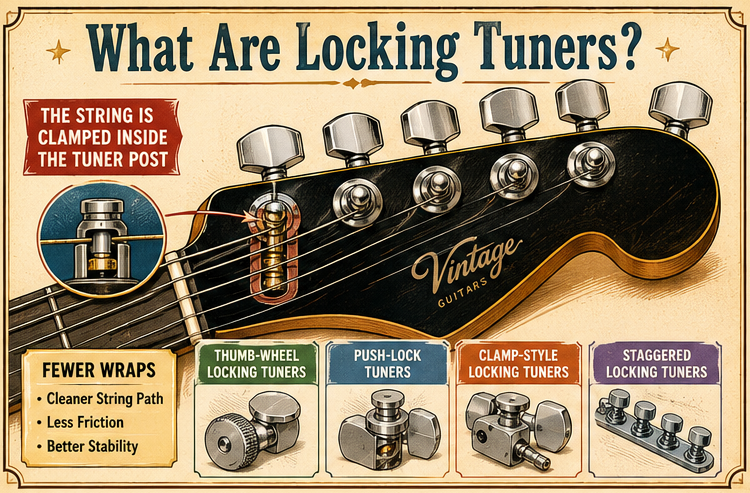
What Are Locking Tuners?
Locking tuners are guitar tuning machines that clamp the string inside the tuner post instead of relying on multiple wraps of string around the post.
Traditional tuners require the player to leave extra string length and create several wraps around the tuning post. Locking tuners use a locking mechanism that grips the string securely, allowing fewer wraps and reducing string movement.
Common locking tuner designs include:
- Thumb-wheel locking tuners
- Push-lock tuners
- Clamp-style locking tuners
- Staggered locking tuners
They are available from many manufacturers and can be found on both factory and custom guitars.
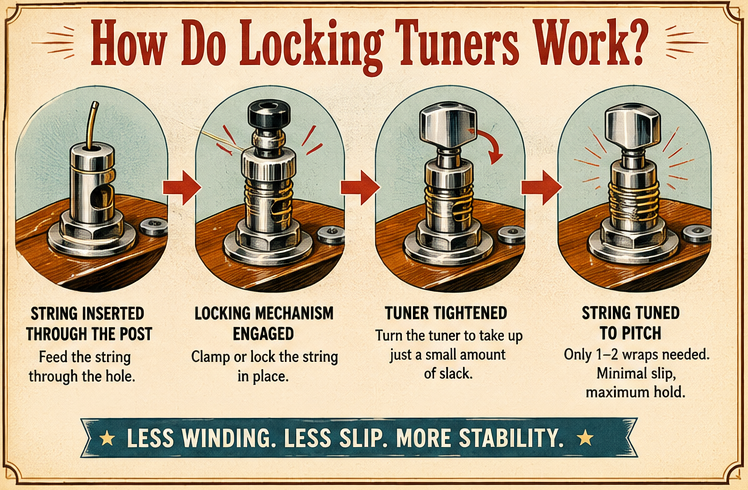
How Do Locking Tuners Work?
With standard tuners, the string is held mainly by friction from the wraps around the tuning post.
With locking tuners:
- The string is inserted through the tuning post.
- The locking mechanism clamps the string.
- The tuner is tightened.
- The string is tuned to pitch.
Because the string is locked in place, only a small amount of winding is needed.
This reduces the amount of string that can slip or move around the tuning post.
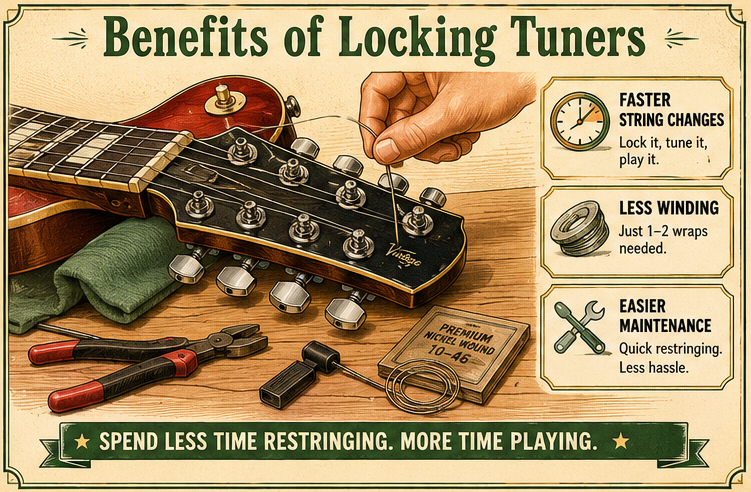
Benefits of Locking Tuners
Faster String Changes
One of the biggest advantages of locking tuners is convenience.
Traditional tuners require careful measurement, cutting, and winding to achieve proper wraps. Locking tuners simplify the process.
A typical string change becomes:
- Insert string
- Lock tuner
- Tune up
- Stretch strings
- Play
For players who change strings frequently, this can save significant time.
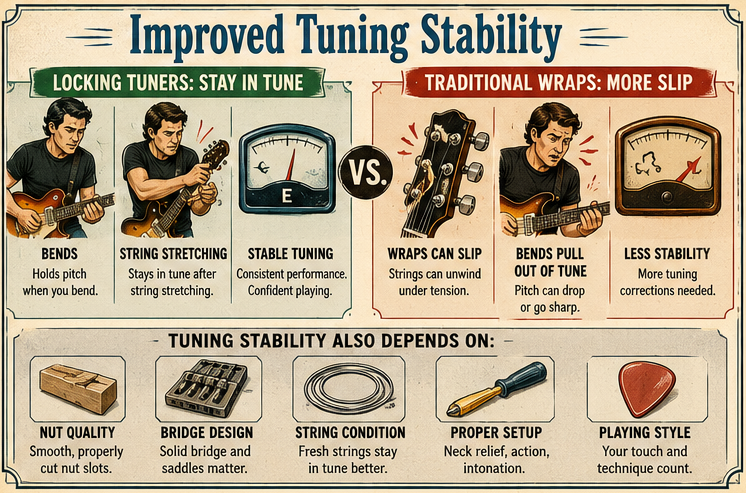
Improved Tuning Stability
Locking tuners can improve tuning stability because there is less excess string movement around the tuning post.
Traditional tuning problems often come from:
- Loose string wraps
- Poor winding technique
- Strings slipping after bends
- New strings stretching
Locking tuners reduce one common source of instability.
However, it is important to understand that locking tuners are not a complete solution. Tuning stability also depends on:
- Nut quality
- Bridge design
- String condition
- Proper setup
- String stretching
- Playing style
A guitar with a poorly cut nut may still have tuning issues even with locking tuners.
Better for Tremolo Guitars?
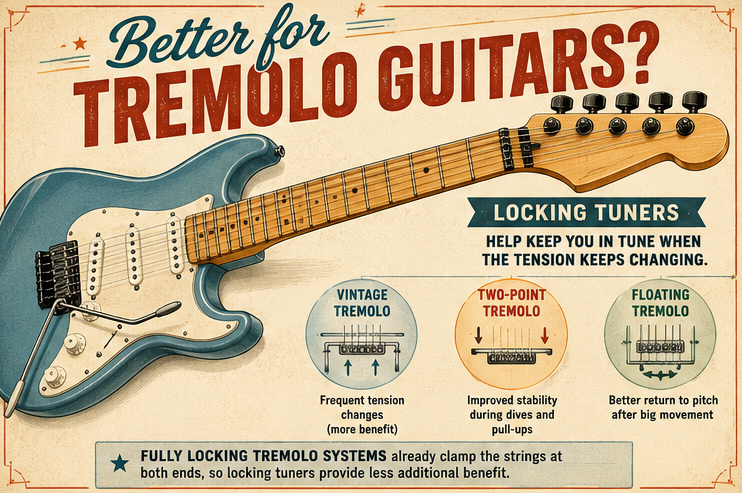
Locking tuners are especially useful on guitars with tremolo systems.
When using a tremolo bridge, strings experience repeated tension changes. A loose string wrap around the tuner post can contribute to tuning problems.
Locking tuners help by keeping the string firmly secured.
They work particularly well with:
- Vintage tremolo bridges
- Two-point tremolo systems
- Floating tremolo guitars
However, fully locking tremolo systems such as double-locking designs already clamp the strings at the bridge and nut, so locking tuners provide less benefit.
Do Locking Tuners Improve Tone and Sustain?
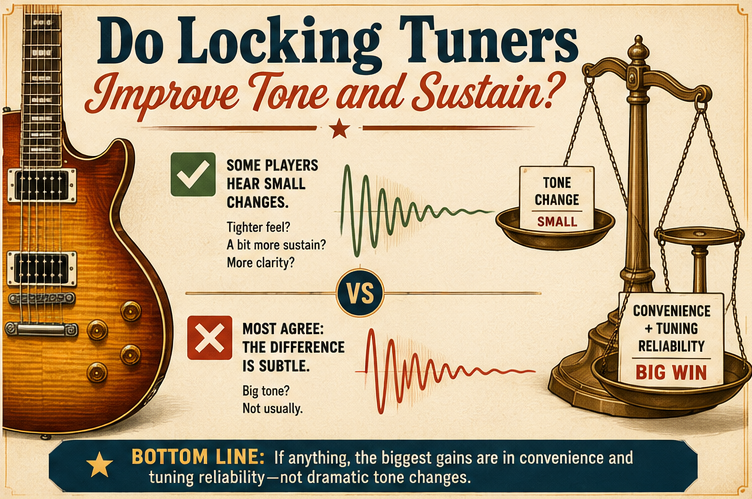
This is one of the most debated topics.
Some players believe locking tuners improve sustain because the string connection is more secure. Others feel the difference is very small compared with factors such as:
- Bridge design
- Body construction
- Neck joint
- Pickups
- Strings
- Amplifier
The main advantage of locking tuners is not a dramatic tone change. Their biggest benefits are convenience and tuning reliability.
Are Locking Tuners Heavier?
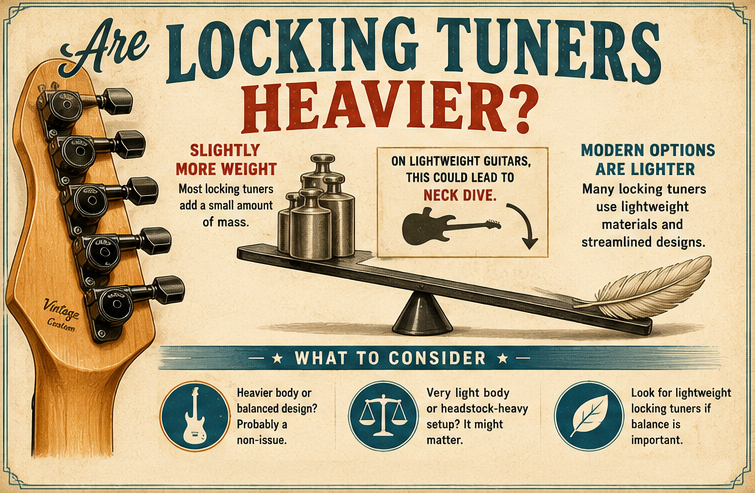
Locking tuners are often slightly heavier than traditional tuners because of the additional locking mechanism.
On some guitars, extra weight at the headstock can slightly affect balance.
Possible effects include:
- Improved sustain in some cases
- Increased headstock weight
- Slight neck dive on lightweight guitars
However, many modern locking tuners are designed with lightweight materials to reduce this issue.
Locking Tuners vs Traditional Tuners
| Feature | Locking Tuners | Traditional Tuners |
|---|---|---|
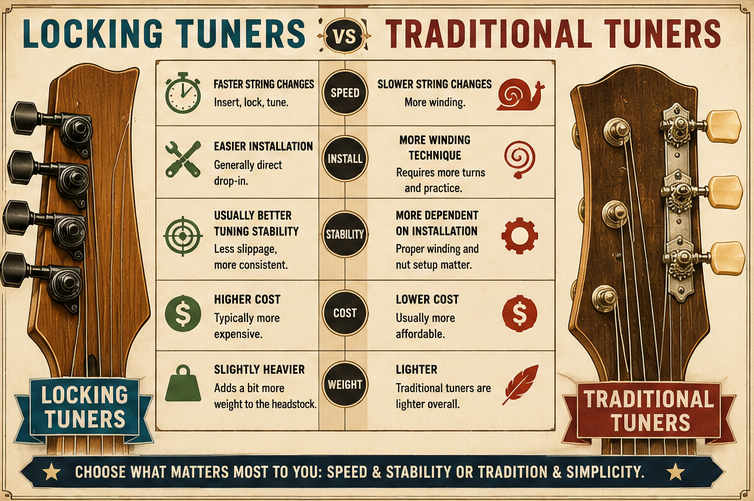
| String changes | Faster | Slower |
| String installation | Easier | Requires winding technique |
| Tuning stability | Usually better | Depends on installation |
| Cost | Higher | Lower |
| Maintenance | Simple | Simple |
| Weight | Slightly heavier | Usually lighter |
Locking tuners provide convenience and consistency, while traditional tuners remain reliable when installed correctly.

Are Locking Tuners Worth It for Beginners?
For beginners, locking tuners are helpful but not essential.
They can make guitar maintenance easier because string changes are less frustrating. Beginners often struggle with:
- Too many string wraps
- Loose tuning posts
- Poor string installation
Locking tuners remove some of these problems.
However, beginners should also learn proper string installation techniques because those skills remain useful.

Are Locking Tuners Worth It on a Custom Guitar?
For a custom guitar, locking tuners are often an excellent choice.
They fit especially well with guitars designed for:
- Performance use
- Tremolo systems
- Modern playing styles
- Frequent string changes
- Professional recording
They also pair well with other premium upgrades such as:
- High-quality bridges
- Bone nuts
- Premium pickups
- Stainless steel frets
A custom guitar is built around the player’s needs, and locking tuners are a practical upgrade for many players.
Are Locking Tuners Worth It?
Locking tuners are not a magic upgrade that transforms every guitar, but they offer real practical benefits.
They make string changes faster, reduce string slipping, and can improve tuning consistency, especially on guitars with tremolo systems.
For players who rarely change strings or have a simple fixed bridge guitar, traditional tuners may be perfectly fine.
For players who perform, use tremolo effects, bend aggressively, or simply want a more convenient maintenance experience, locking tuners are one of the most worthwhile upgrades you can make.
They may not completely change your guitar’s sound, but they can make your guitar easier, faster, and more reliable to play.