

Guitar Care & Maintenance
How to Protect Your Guitar Finish: A Complete Care Guide for Electric Guitar Owners
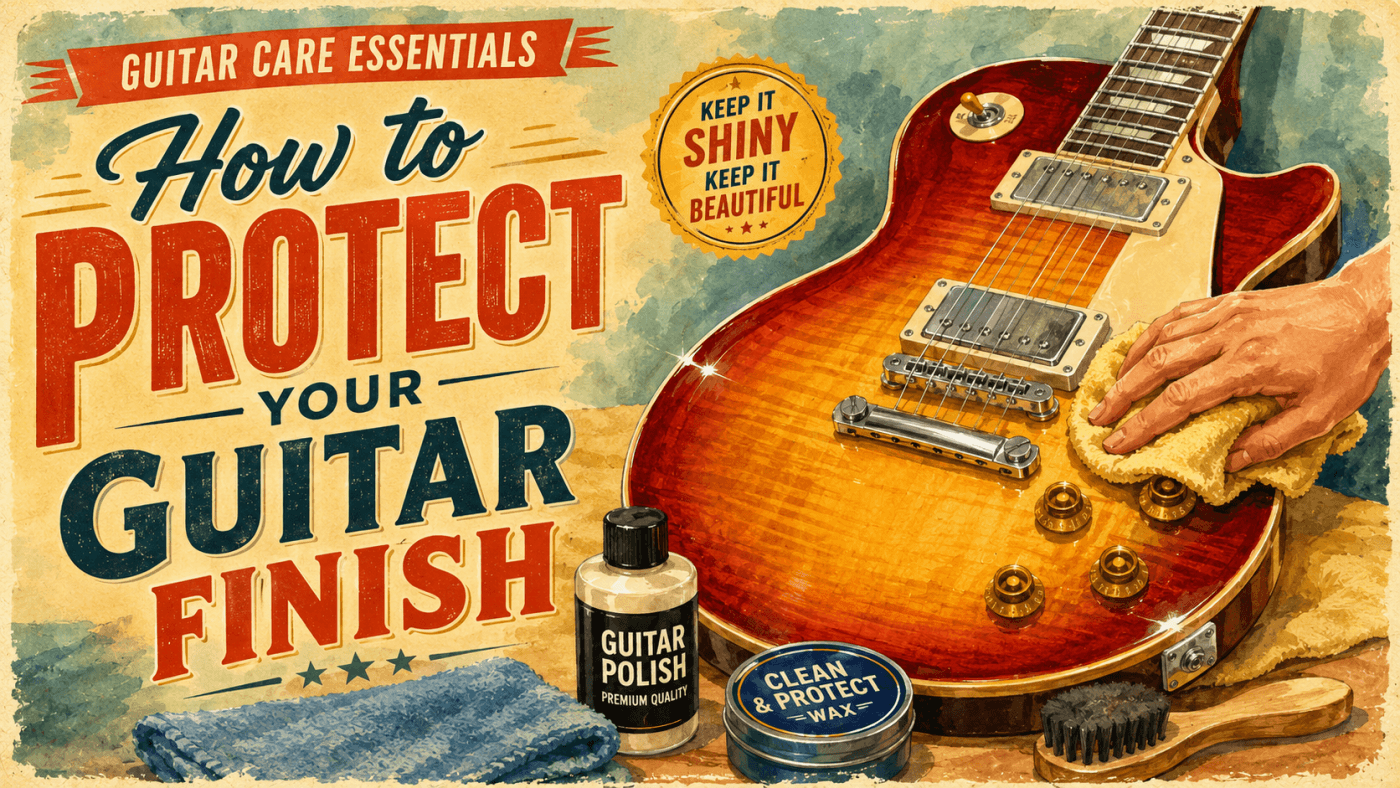
Your guitar finish does more than make the instrument look beautiful. It protects the wood, seals the surface, adds visual character, and helps preserve the guitar’s long-term value. Whether your guitar has a glossy polyurethane finish, a delicate nitrocellulose lacquer, a satin surface, or a natural oil finish, proper care is important.
Many players damage their guitar finish without realizing it. Sweat, dust, sunlight, humidity, poor stands, harsh cleaners, belt buckles, and improper storage can all leave marks over time. Some damage is cosmetic, but some can permanently affect the finish or even expose the wood underneath.
The good news is that protecting your guitar finish is not difficult. With the right habits, cleaning methods, storage conditions, and handling care, your guitar can stay beautiful for many years.
This guide explains how guitar finishes work, what causes damage, how to clean different finishes safely, and how to protect your guitar from scratches, fading, cracking, clouding, and chemical reactions.
What Is a Guitar Finish?
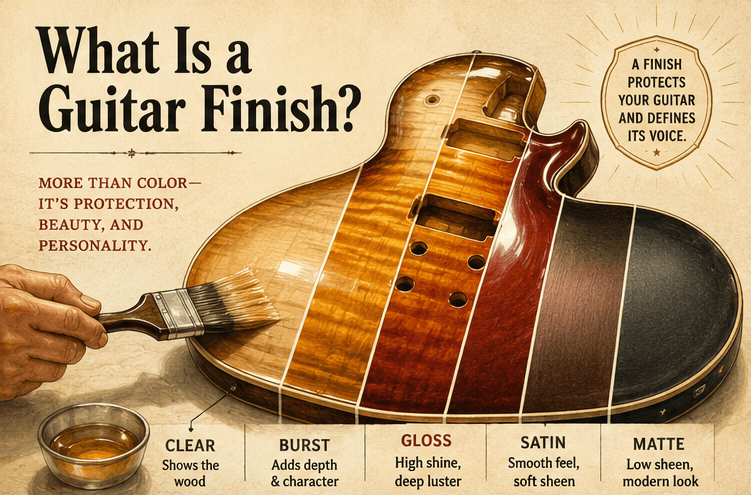
A guitar finish is the protective coating applied over the wood surface of the guitar. It can be clear, colored, glossy, satin, matte, transparent, burst, metallic, or natural-looking.
A finish serves several purposes:
- Protects the wood from moisture and dirt
- Helps prevent surface wear
- Adds color and visual style
- Enhances wood grain
- Gives the guitar a smooth playing feel
- Helps preserve resale value
- Creates the final visual identity of the instrument
Different finishes require different care. A finish that is safe for one guitar may not be safe for another. This is why understanding your guitar’s finish type is the first step in protecting it.
Common Types of Guitar Finishes
Before cleaning or polishing your guitar, it helps to know what kind of finish you have.
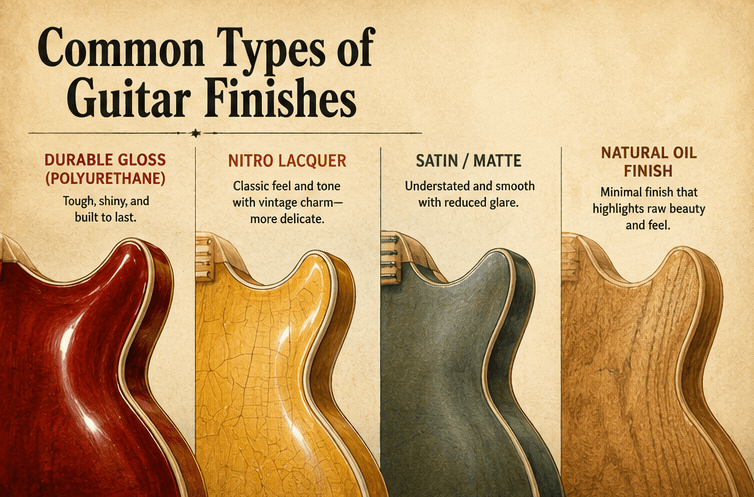
Polyurethane and Polyester Finishes
Polyurethane and polyester finishes are common on many modern electric guitars. They are durable, hard, glossy, and resistant to moisture and everyday wear.
These finishes are generally easier to maintain than nitro finishes. Most guitar-safe cleaners work well on poly finishes.
Poly finishes are known for:
- Strong durability
- Good scratch resistance
- Easy cleaning
- Less chemical sensitivity
- Glossy modern appearance
- Long-lasting protection
Even though poly finishes are tough, they can still scratch, chip, haze, or become dull if abused.
Nitrocellulose Lacquer Finishes
Nitrocellulose lacquer, often called nitro, is a traditional finish used on many vintage-style and high-end guitars. It is thinner and more delicate than poly.
Nitro finishes can age beautifully. Over time, they may develop checking, fading, yellowing, and natural wear. Many players love this vintage look.
However, nitro is more sensitive to:
- Heat
- Sunlight
- Rubber
- Vinyl
- Alcohol
- Strong cleaners
- Sweat
- Chemical contact
- Sudden temperature changes
Nitro finishes need gentle care and safer storage habits.
Satin and Matte Finishes
Satin and matte finishes are popular on modern guitars because they feel smooth and understated. They are less shiny than gloss finishes.
The main rule with satin and matte finishes is: do not polish them like gloss finishes.
Aggressive polishing can create shiny spots that cannot easily be reversed. A satin guitar should be cleaned gently, not buffed to a high shine.
Oil and Natural Finishes
Some guitars use oil, wax, or natural-style finishes. These finishes allow the wood to feel more organic and less coated.
Oil finishes can feel comfortable and natural, but they may require special care. They are usually less protective than thick gloss finishes and may need occasional reconditioning depending on the manufacturer’s recommendation.
Avoid using standard guitar polish on oil-finished guitars unless the product is specifically safe for that finish.
Why Protecting Your Guitar Finish Matters
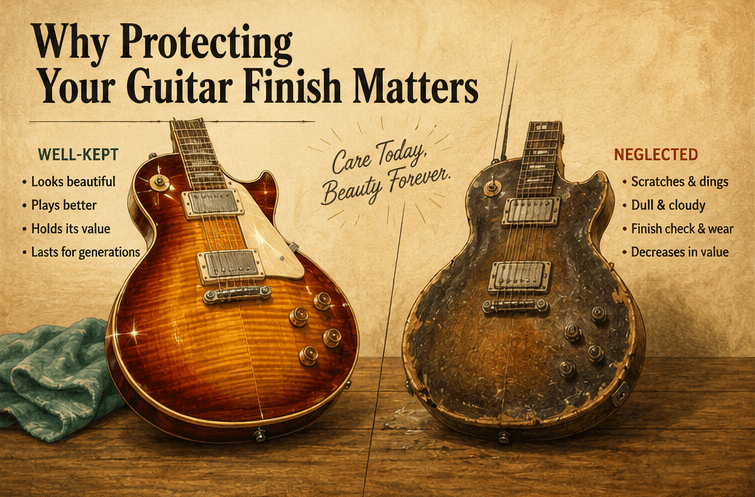
A guitar finish can be damaged gradually or suddenly. Small scratches, dull areas, cloudy spots, and finish cracks often happen because of everyday habits.
Protecting the finish helps your guitar:
- Look better for longer
- Feel cleaner and smoother
- Resist sweat and dirt buildup
- Avoid unnecessary scratches
- Maintain resale value
- Stay safer from moisture
- Age more gracefully
- Avoid avoidable repairs
Finish damage is often difficult to repair perfectly. Prevention is much easier than restoration.

Wash Your Hands Before Playing
One of the easiest ways to protect your guitar finish is to wash and dry your hands before playing.
Your hands naturally carry sweat, oils, dirt, food residue, lotion, and moisture. These substances transfer to the strings, fretboard, hardware, and body.
Over time, sweat and oil can dull the finish, corrode hardware, and create sticky buildup where your arm rests on the guitar.
Before playing, try to avoid:
- Greasy food
- Hand lotion
- Sunscreen
- Strong perfume
- Sticky residue
- Wet hands
- Dirty hands
Clean hands keep both the finish and strings healthier.
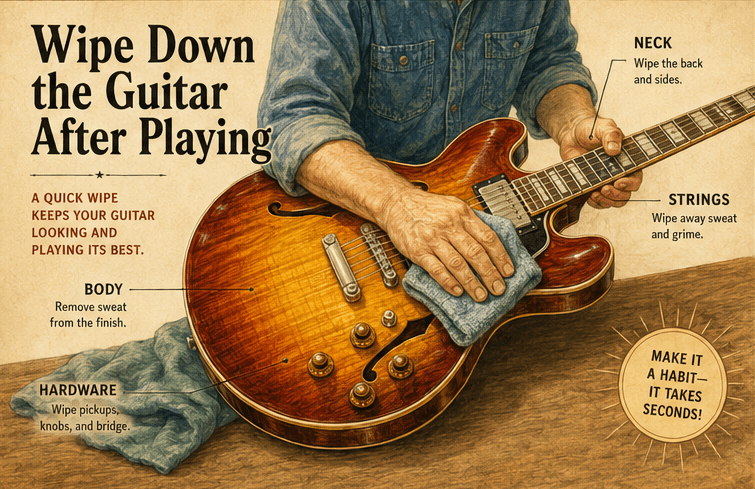
Wipe Down the Guitar After Playing
A quick wipe-down after playing is one of the best habits you can build.
Use a clean microfiber cloth to wipe:
- Body surface
- Area where your arm rests
- Back of the neck
- Strings
- Hardware
- Pickguard
- Around pickups and bridge
- Headstock
This only takes one or two minutes, but it prevents sweat and oil from sitting on the finish for hours or days.
This is especially important if you live in a humid climate or sweat heavily while playing.
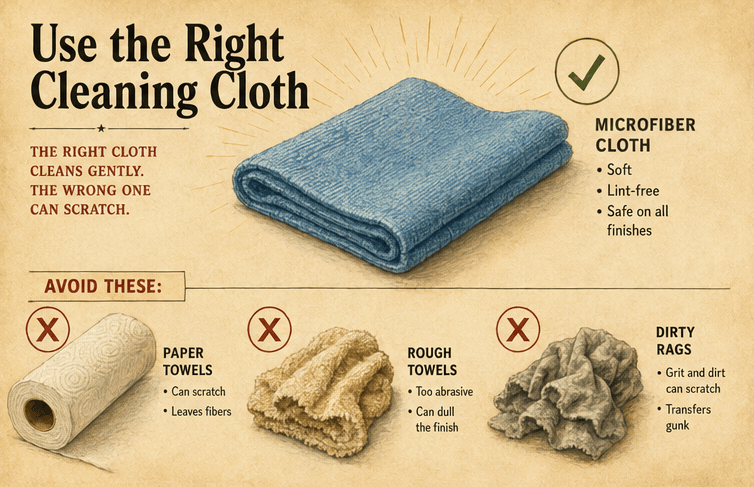
Use the Right Cleaning Cloth
Not all cloths are safe for guitar finishes.
The safest choice is a clean, soft microfiber cloth. It should be free of dust, sand, metal particles, or old polish residue.
Avoid using:
- Paper towels
- Rough towels
- Dirty rags
- Tissues
- Abrasive cloths
- Old shirts with prints or buttons
- Cloths used for household cleaning
Paper towels may look soft, but they can create fine scratches on glossy finishes. A dirty cloth can also drag dust across the finish and create swirl marks.
Keep one or two microfiber cloths only for guitar use.
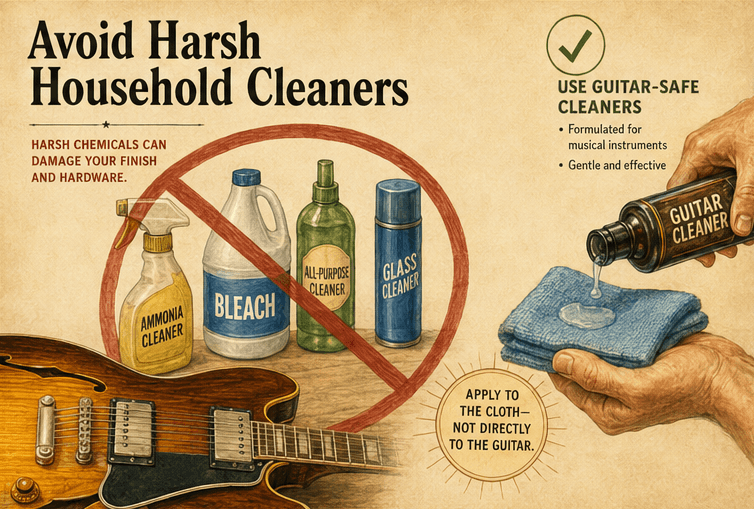
Avoid Harsh Household Cleaners
Household cleaners are not designed for guitar finishes. Some can damage the surface, dry out lacquer, leave residue, or react with delicate finishes.
Avoid using:
- Glass cleaner
- Alcohol
- Bleach
- Vinegar
- Furniture polish
- Kitchen cleaner
- Bathroom cleaner
- Strong solvents
- Wet wipes
- Disinfectant wipes
- Silicone-heavy products
- Abrasive compounds
For regular cleaning, use a dry microfiber cloth first. If more cleaning is needed, use a guitar-safe cleaner designed for your finish type.
Always apply cleaner to the cloth, not directly onto the guitar. Spraying directly onto the guitar can allow liquid to enter pickups, switches, screw holes, bridge cavities, or unfinished wood.
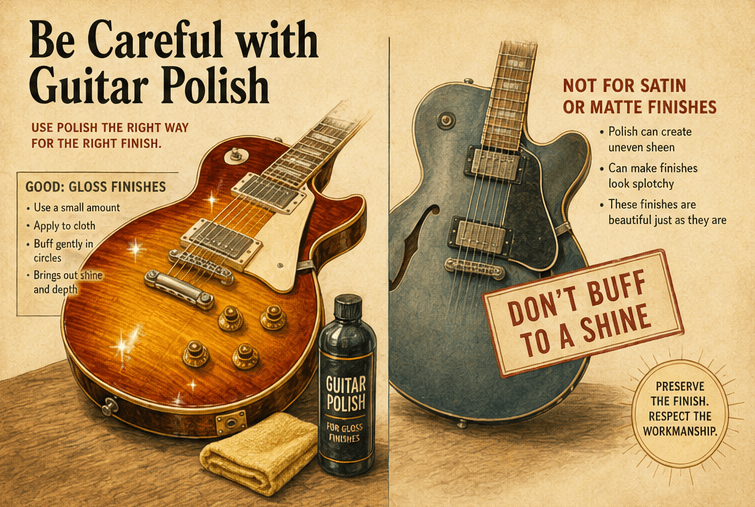
Be Careful with Guitar Polish
Guitar polish can make a glossy guitar look beautiful, but it should be used correctly.
Use polish only if it is safe for your guitar’s finish. Gloss poly finishes are usually easier to polish. Nitro finishes require nitro-safe products. Satin and matte finishes should usually not be polished.
Polish is best for:
- Glossy finishes
- Light fingerprints
- Mild haze
- Light surface dullness
- Final cleaning after dust removal
Do not over-polish your guitar. Too much polishing can leave residue and may slowly affect certain finishes.
For satin or matte guitars, use a dry or slightly damp microfiber cloth instead of gloss polish.
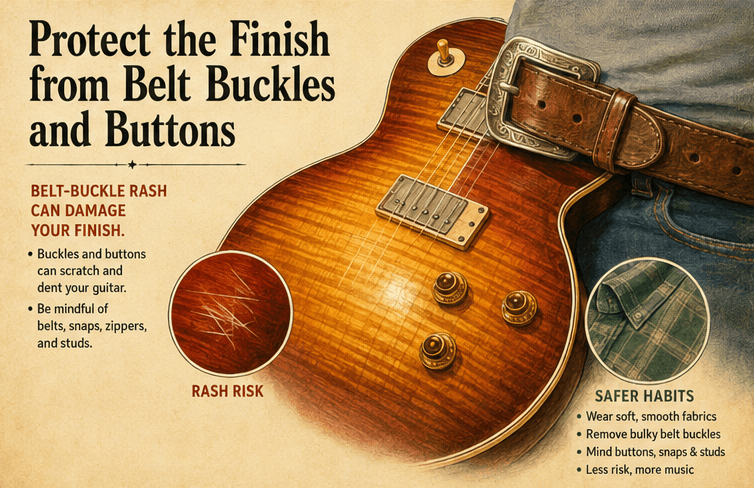
Protect the Finish from Belt Buckles and Buttons
One of the most common finish damages is buckle rash on the back of the guitar. This happens when belt buckles, metal buttons, zippers, or jewelry rub against the body.
To prevent buckle rash:
- Avoid wearing a belt with a large metal buckle while playing
- Wear softer clothing when playing
- Be careful with jacket zippers
- Avoid metal buttons near the guitar back
- Remove sharp jewelry
- Use a guitar-friendly strap
- Keep the guitar away from rough surfaces
Even a durable finish can become scratched if metal repeatedly rubs against it.

Use a Safe Guitar Stand
A guitar stand can protect your guitar, but the wrong stand can damage the finish.
Some rubber, foam, or vinyl materials can react with certain finishes, especially nitrocellulose lacquer. This can cause discoloration, softening, or sticky marks.
For nitro-finished guitars, use a stand labeled as nitro-safe or cover the contact points with a clean cotton cloth.
When choosing a stand, look for:
- Stable design
- Soft contact points
- Nitro-safe materials if needed
- Proper neck support
- No sharp edges
- Good balance
- Secure lower cradle
Never lean your guitar against a wall, amp, chair, or table edge. Falls can damage both the finish and the instrument.
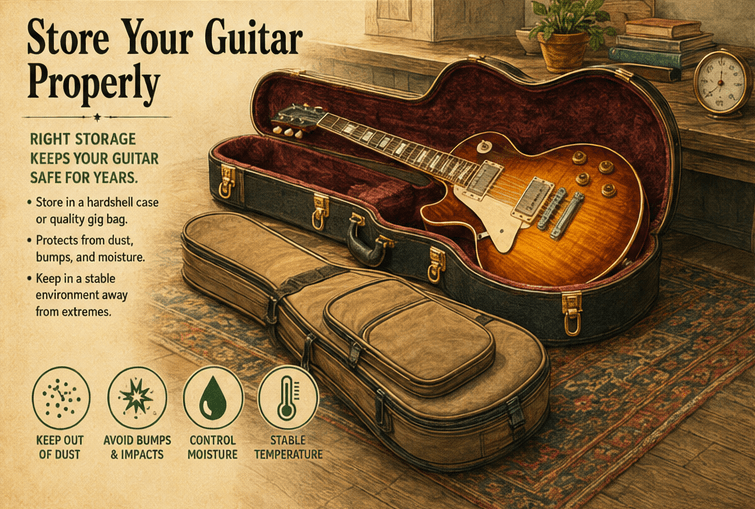
Store Your Guitar Properly
Good storage is one of the best ways to protect the finish.
A hard case or quality gig bag helps protect the guitar from dust, bumps, sunlight, and sudden temperature changes.
For long-term storage, a hard case is usually the safest choice.
Avoid storing your guitar:
- In direct sunlight
- Near windows
- Near heaters
- Near air conditioners
- In damp rooms
- In very dry rooms
- In cars
- Against exterior walls
- On unstable stands
- Near chemical products
A stable environment helps protect both the finish and the wood.
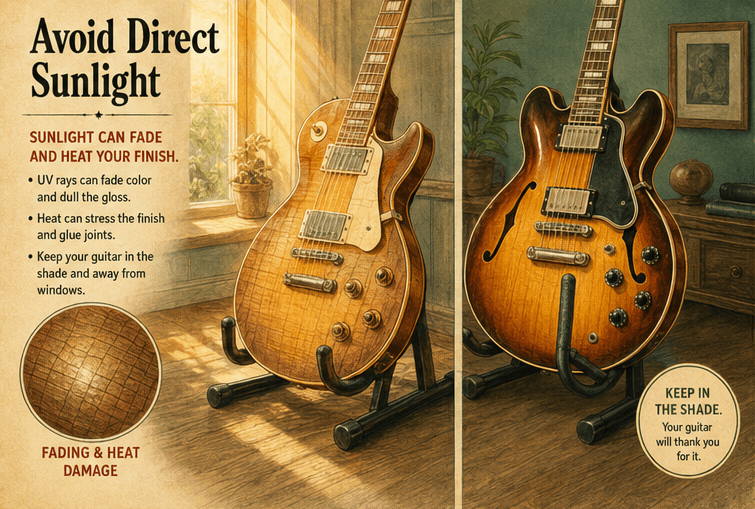
Avoid Direct Sunlight
Sunlight can fade, darken, or yellow a guitar finish over time. It can also heat the guitar unevenly, which may affect the finish and wood.
Transparent finishes, burst finishes, and natural wood finishes can be especially sensitive to UV exposure.
Direct sunlight may cause:
- Color fading
- Yellowing
- Uneven aging
- Finish checking
- Wood movement
- Heat damage
Do not leave your guitar sitting in front of a sunny window for long periods. Even if it looks beautiful on display, sunlight can slowly change the finish.
Control Temperature and Humidity
Temperature and humidity affect both the wood and the finish.
Sudden changes can cause wood movement, finish checking, fret sprout, neck movement, or cracks.
A safe general humidity range for guitars is often around 40% to 50% relative humidity. Some variation is normal, but extreme dryness or extreme moisture should be avoided.
Avoid:
- Very dry rooms
- Very humid rooms
- Sudden hot-to-cold changes
- Leaving the guitar in a car
- Storing near heaters
- Storing near air vents
- Opening a cold case too quickly in a warm room
If your guitar has been in a cold environment, let it warm up gradually in its case before opening it. This is especially important for nitro finishes, which can develop checking from sudden temperature shock.
Be Extra Careful with Nitro Finishes
Nitro finishes need special care because they are more reactive than modern poly finishes.
To protect a nitro finish:
- Use only nitro-safe cleaner
- Avoid alcohol and strong solvents
- Avoid rubber and vinyl contact
- Avoid cheap stands unless protected
- Avoid leaving straps on the guitar long-term
- Avoid direct sunlight
- Avoid sudden temperature changes
- Wipe sweat off after playing
- Store in a safe case
Leather straps, synthetic straps, rubber stands, and foam padding can sometimes react with nitro. When in doubt, remove the strap before storing the guitar and keep the guitar in a safe case.
Nitro naturally ages over time, but avoidable chemical damage is different from natural aging.
Do Not Leave Your Strap on the Guitar Long-Term
Many players store guitars with the strap attached. This is convenient, but it can sometimes cause finish problems.
Some strap materials, dyes, leather treatments, plasticizers, or rubber parts can react with guitar finishes. This is especially risky with nitro finishes.
To be safe:
- Remove the strap before long-term storage
- Avoid leaving leather or synthetic material pressed against the body
- Check strap contact areas regularly
- Use high-quality strap materials
- Avoid straps with rough metal hardware near the body
A strap can also press dust or grit into the finish inside a case.
Protect the Guitar During String Changes and Setup Work
String changes, cleaning, and setup work are common times for accidental scratches.
Before working on your guitar:
- Place it on a soft mat or towel
- Support the neck
- Keep tools organized
- Avoid placing tools on the guitar body
- Cut string ends carefully
- Keep metal parts away from the finish
- Remove loose bridge parts carefully
- Do not drag strings across the body
String ends are sharp and can easily scratch the finish. When removing old strings, coil them safely and throw them away carefully.
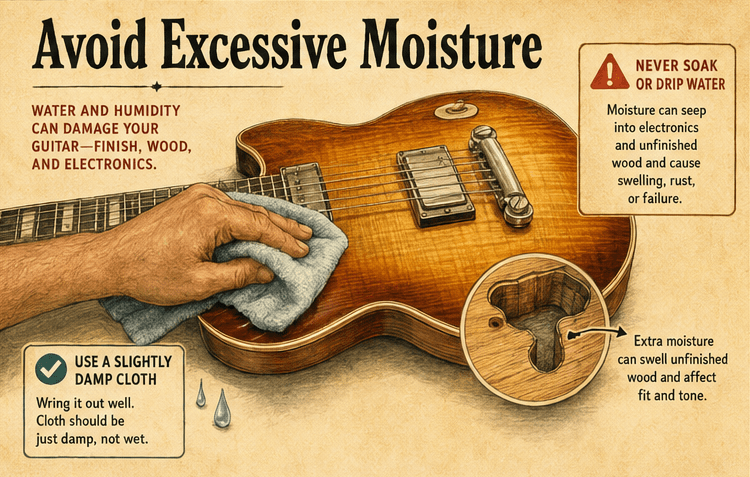
Avoid Excessive Moisture
Water can damage guitars if it enters unfinished wood, screw holes, electronics, pickup cavities, or cracks in the finish.
A slightly damp cloth can be safe for some cleaning tasks, but it should never be wet.
When using a damp cloth:
- Use very little moisture
- Avoid electronics
- Avoid pickups
- Avoid bridge holes
- Avoid unfinished wood
- Dry immediately
- Do not let water sit on the finish
Never rinse, soak, or heavily wet any part of the guitar.
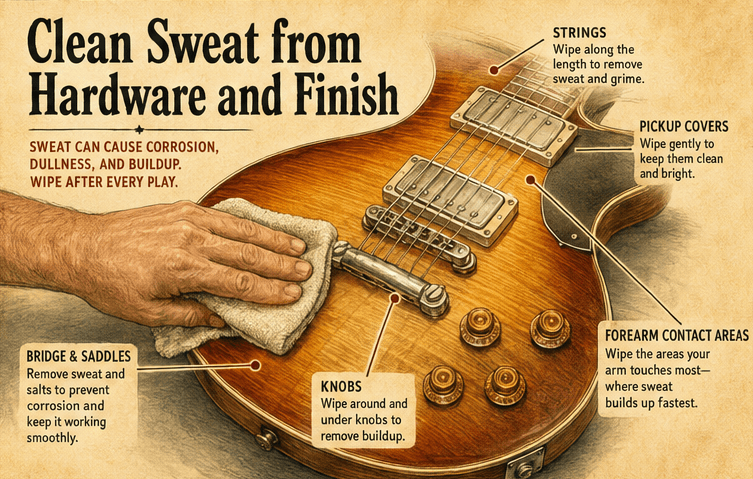
Clean Sweat from Hardware and Finish
Sweat is one of the most damaging everyday substances for guitars. It contains moisture and salts that can corrode hardware and dull finishes.
Pay special attention to:
- Bridge
- Saddles
- Pickup covers
- Screws
- Tuning machines
- Strings
- Forearm contact area
- Neck back
- Control knobs
If you play live or sweat heavily, wipe the guitar down immediately after playing.
Gold hardware needs extra care because gold plating can wear off if scrubbed aggressively. Use a soft cloth and gentle pressure.
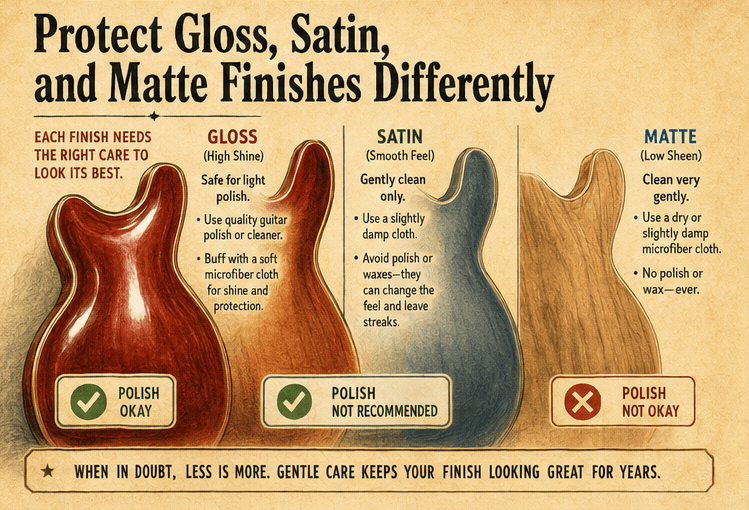
Protect Gloss, Satin, and Matte Finishes Differently
Different finish textures need different care.
Gloss finish care
Gloss finishes can be cleaned and lightly polished with guitar-safe products. Always remove dust first to avoid swirl marks.
Satin finish care
Satin finishes should be cleaned gently. Avoid polishing because it can create shiny areas.
Matte finish care
Matte finishes are even more sensitive to polishing marks. Use a dry microfiber cloth and very gentle cleaning.
Natural or oil finish care
Follow manufacturer recommendations. These finishes may need special oils or waxes, but the wrong product can cause problems.
The wrong cleaning method can permanently change the look of satin and matte finishes.
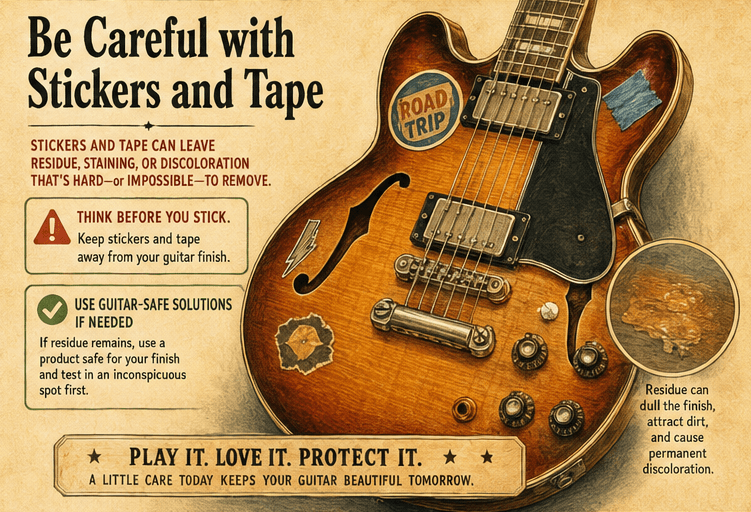
Be Careful with Stickers and Tape
Stickers can damage a guitar finish, especially if they stay on for a long time. Adhesive can leave residue, discolor the finish, or pull up delicate lacquer during removal.
Avoid placing stickers or tape directly on the guitar body unless you are comfortable with possible permanent marks.
This includes:
- Decorative stickers
- Tape labels
- Gaffer tape
- Duct tape
- Packaging tape
- Temporary stage markings
If you need temporary tape for performance or recording, use low-tack tape and test carefully in a hidden area first.

Protect the Guitar During Travel
Travel is risky for guitar finishes because of bumps, temperature changes, humidity changes, and case movement.
When traveling:
- Use a quality hard case
- Keep the guitar stable inside the case
- Do not leave it in a hot car
- Avoid checking it as luggage if possible
- Let the guitar adjust to room temperature before opening
- Keep small tools away from the body
- Use a case humidifier if needed
- Avoid placing heavy items on the case
A good case is one of the best investments for protecting your guitar finish.
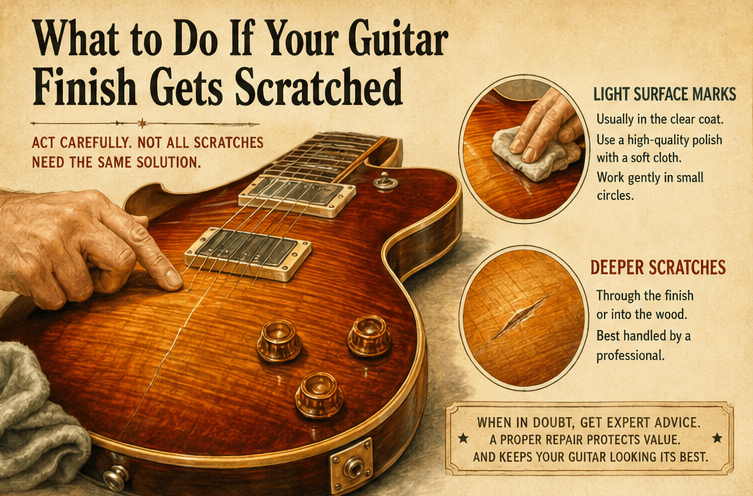
What to Do If Your Guitar Finish Gets Scratched
Small scratches are normal over time. How you handle them depends on the finish type.
For light scratches on gloss poly finishes, a guitar-safe polish may reduce the appearance. For deeper scratches, professional buffing may be required.
For nitro finishes, be more careful. Some scratches become part of the finish’s natural aging, but aggressive polishing can cause more damage.
For satin and matte finishes, do not try to polish scratches aggressively because you may create shiny patches.
If the scratch is deep, exposes wood, or affects a valuable guitar, consult a professional guitar technician.

Common Mistakes That Damage Guitar Finishes
Many finish problems come from avoidable habits.
Common mistakes include:
- Using household cleaners
- Leaving sweat on the guitar
- Using paper towels
- Polishing satin finishes
- Leaving the guitar in sunlight
- Storing the guitar in a car
- Using unsafe stands
- Leaving straps attached long-term
- Wearing belt buckles while playing
- Spraying cleaner directly on the guitar
- Using too much water
- Letting string ends scratch the body
- Ignoring humidity and temperature
Avoiding these mistakes can greatly extend the life of your guitar finish.
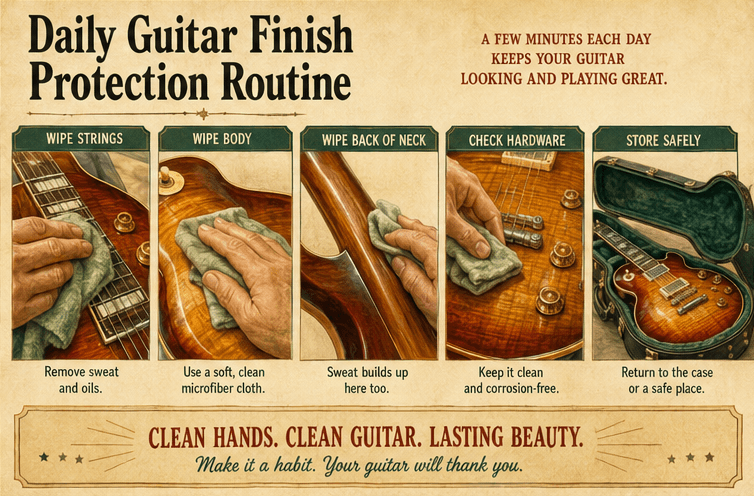
Daily Guitar Finish Protection Routine
A simple daily routine is enough for most players.
After playing:
- Wipe the strings.
- Wipe the body where your arm rested.
- Wipe the back of the neck.
- Wipe fingerprints from hardware.
- Put the guitar on a safe stand or in its case.
This takes less than two minutes and prevents most sweat and grime buildup.
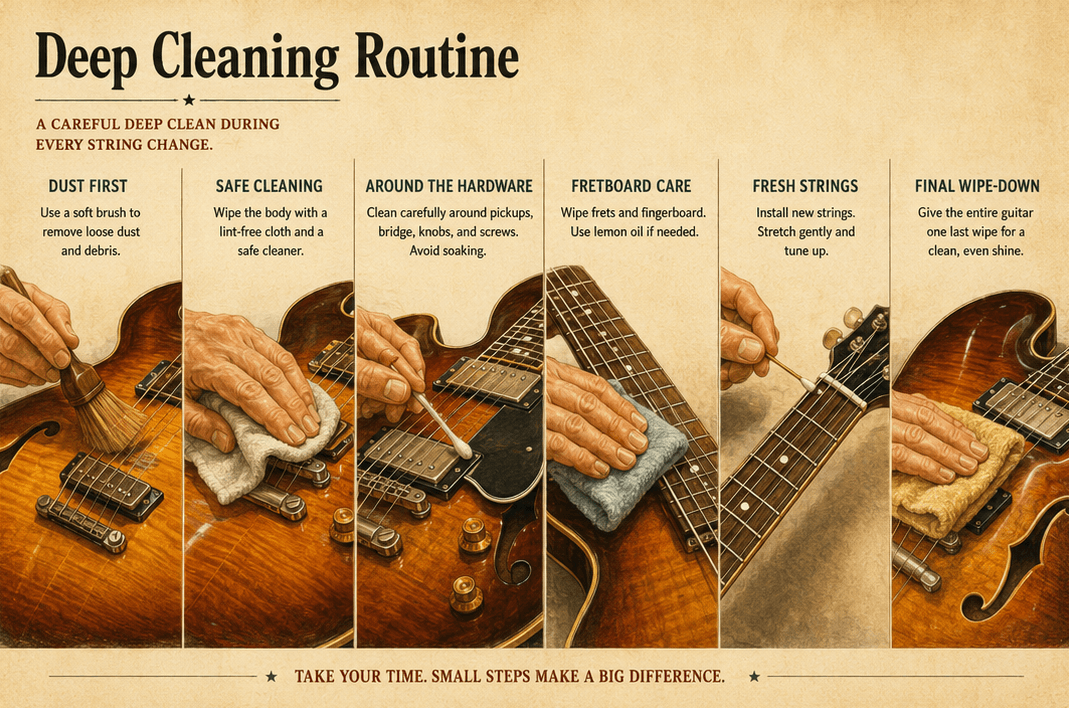
Deep Cleaning Routine
During string changes, take a little more time to clean the guitar properly.
A good deep cleaning routine:
- Remove or loosen the strings.
- Dust the guitar first.
- Clean the body with a safe cloth.
- Use guitar-safe cleaner only if needed.
- Clean around pickups and bridge.
- Wipe the headstock and tuners.
- Clean the fretboard properly.
- Remove polish residue.
- Install fresh strings.
- Wipe the guitar again after tuning.
Do not rush deep cleaning. Slow and careful is safer than aggressive polishing.
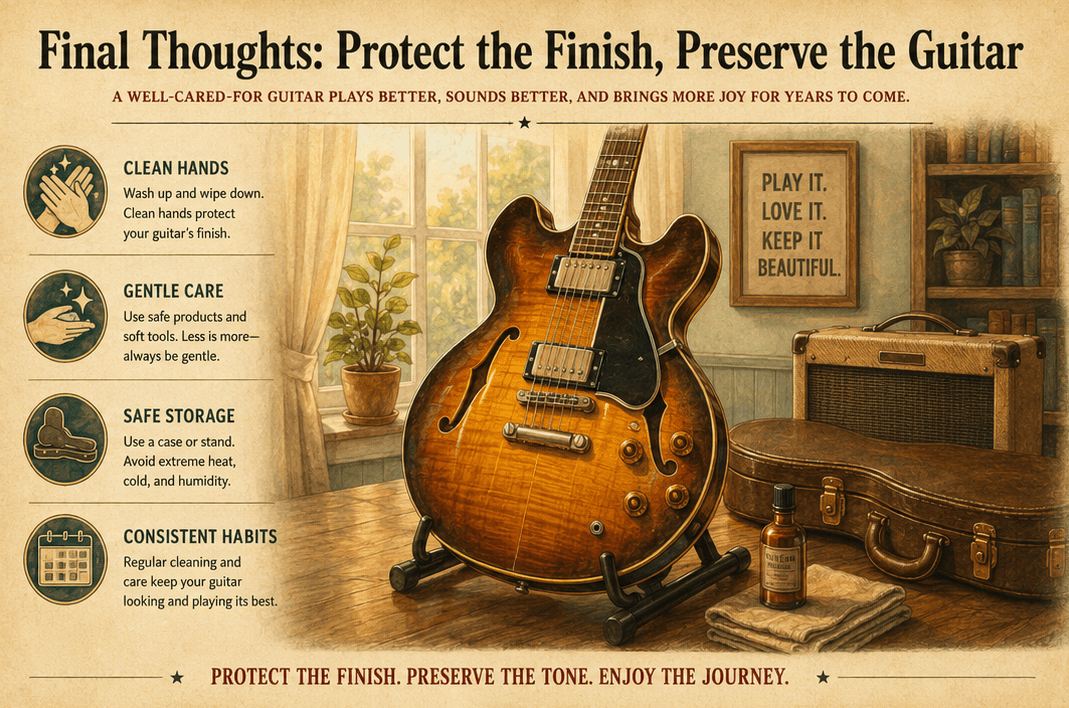
Final Thoughts: Protect the Finish, Preserve the Guitar
Your guitar finish protects the instrument and gives it character. Whether your guitar is glossy, satin, matte, nitro, poly, natural, vintage, or brand new, the right care habits can keep it looking and feeling better for years.
The most important rules are simple: use clean hands, wipe the guitar after playing, avoid harsh cleaners, store it safely, protect it from sunlight and extreme humidity, and use products that match the finish type.
A few small habits can prevent most finish problems. You do not need to over-clean or over-polish your guitar. In fact, gentle and consistent care is usually better than aggressive cleaning.
A well-protected guitar finish keeps your instrument beautiful, comfortable, and inspiring every time you pick it up.