

Hardware & Playability, Tonewoods & Materials
Maple vs Rosewood vs Ebony Fretboard- Complete Guitar Fretboard Wood Guide
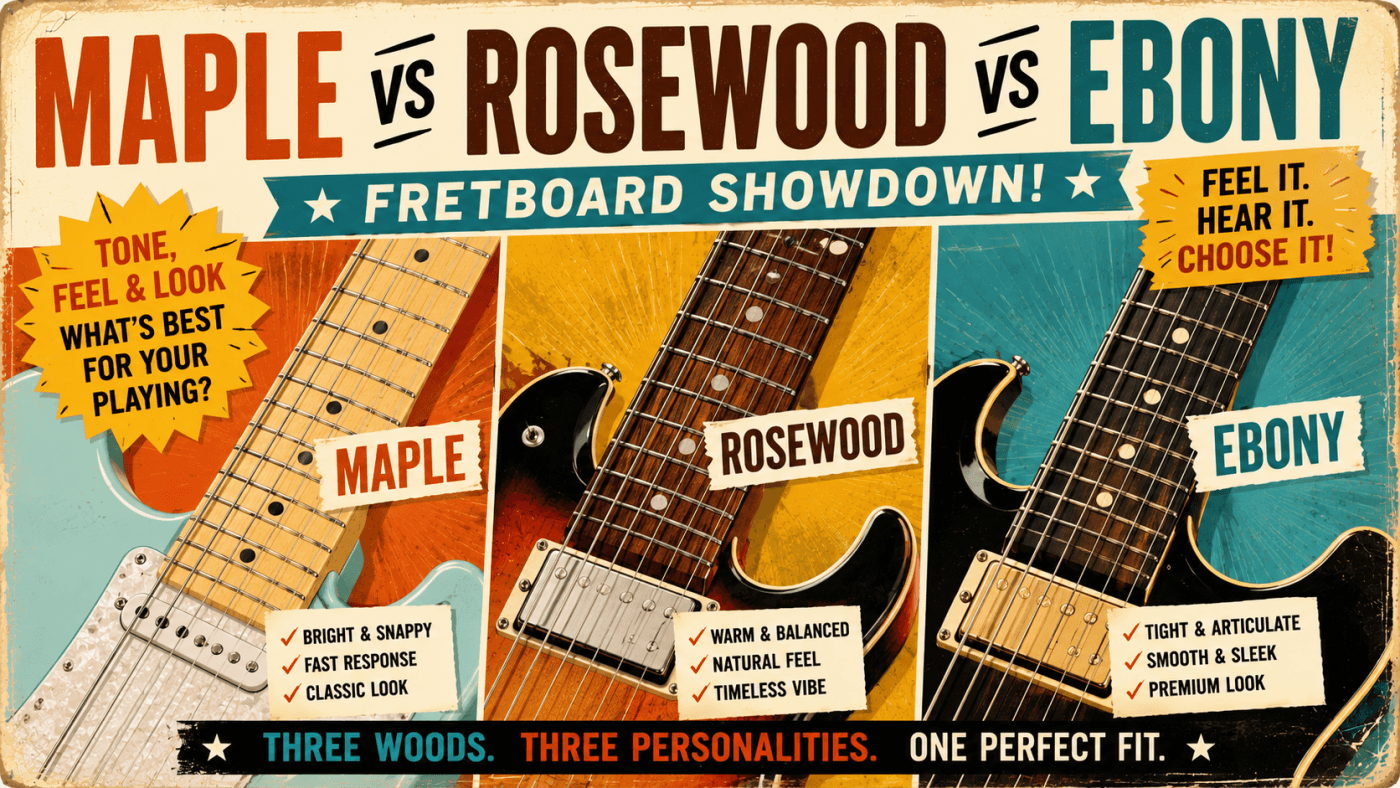
When choosing an electric guitar, many players focus on body shape, pickups, bridge type, neck construction, and finish. But one detail that strongly affects how a guitar feels under your fingers is the fretboard wood.
The fretboard, also called the fingerboard, is the surface your fingers press against when playing notes and chords. It affects the playing feel, appearance, maintenance needs, and sometimes the perceived brightness, warmth, and attack of the guitar.
Among the most common electric guitar fretboard woods, three names appear again and again:
Maple, Rosewood, and Ebony.
Each one has a different look, feel, and personality. Maple is bright, smooth, and visually clean. Rosewood is warm, natural, and comfortable. Ebony is dense, sleek, fast, and premium-feeling.
There is no single “best” fretboard wood for every player. The right choice depends on your playing style, tonal preference, feel preference, maintenance habits, and the overall design of the guitar.
In this guide, we will explain the differences between maple, rosewood, and ebony fretboards, including tone, feel, appearance, durability, maintenance, common guitar styles, and which one you should choose.
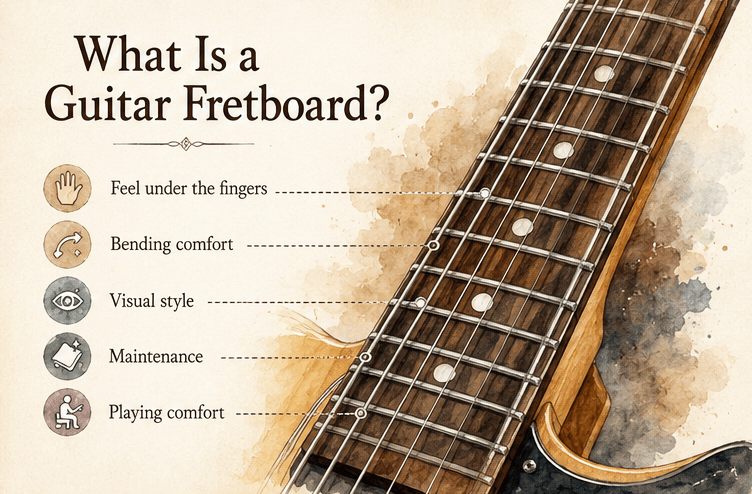
What Is a Guitar Fretboard?
A guitar fretboard is the long wooden surface on the front of the neck where the frets are installed.
When you press a string down against a fret, the fret determines the note you hear. Because your fingers touch the fretboard constantly, the wood used for the fretboard plays an important role in the guitar’s playing experience.
A fretboard affects:
- Feel under the fingers
- String bending comfort
- Visual style
- Neck appearance
- Maintenance needs
- Perceived attack and response
- Long-term wear resistance
- Overall playing comfort
On electric guitars, the pickups and electronics shape most of the amplified sound. However, fretboard wood can still influence how the guitar feels and responds physically.
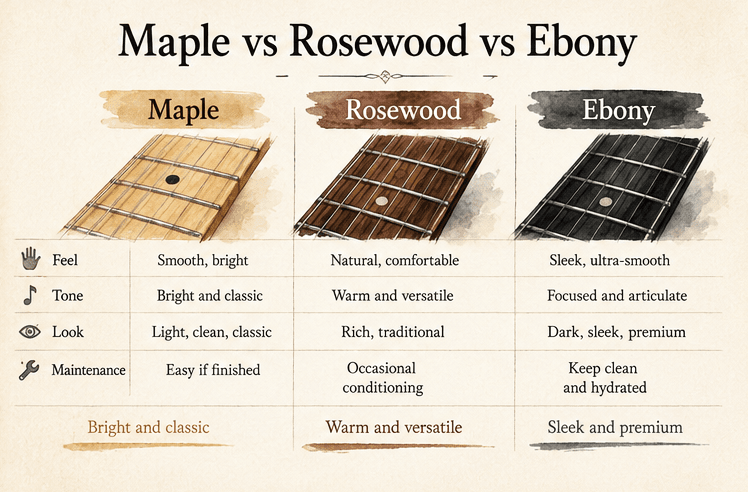
Maple vs Rosewood vs Ebony: Quick Comparison
Here is the simple version:
Fretboard Wood | Feel | Tone Character | Look | Maintenance | Common Use |
|---|---|---|---|---|---|
Maple | Smooth, firm, often finished | Bright, snappy, clear | Light blonde to amber | Easy if finished | S-style, T-style, modern guitars |
Rosewood | Natural, slightly porous, warm feel | Warm, balanced, rounded | Brown with visible grain | Needs occasional conditioning | Many classic and modern guitars |
Ebony | Very smooth, dense, fast | Bright, tight, articulate | Dark brown to black | Needs careful conditioning | Premium, metal, jazz, high-end guitars |
A simple way to think about it:
Maple = bright, clean, classic
Rosewood = warm, natural, versatile
Ebony = sleek, fast, premium
Maple Fretboard
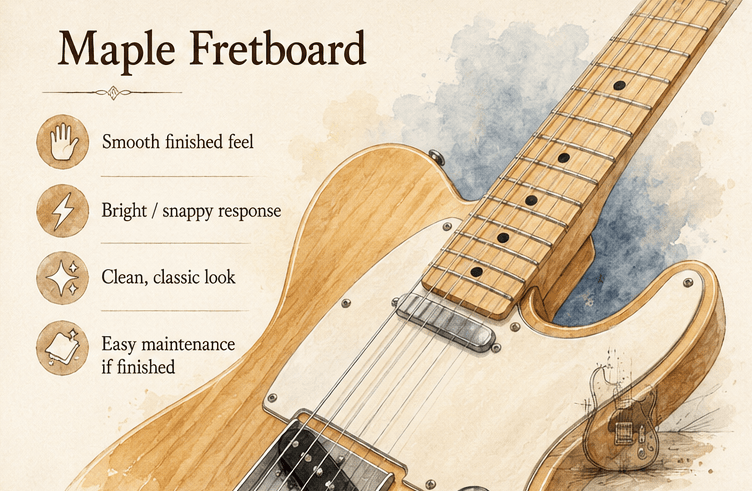
A maple fretboard is one of the most recognizable fretboard options, especially on S-style and T-style guitars. It usually has a light color, ranging from pale cream to golden amber.
Maple is a hard and dense wood. Unlike rosewood or ebony, maple fretboards are often finished with lacquer, polyurethane, satin, or another protective coating. This is because maple is light-colored and can easily show dirt, oil, and wear if left completely unfinished.
How Maple Fretboards Feel
Maple fretboards usually feel smooth, firm, and immediate.
Because many maple fretboards are finished, your fingers often glide over the finish rather than directly touching raw wood. This can make the surface feel slick and polished, especially on gloss maple boards.
Satin maple fretboards can feel faster and less sticky than glossy ones.
Maple often feels:
- Smooth
- Firm
- Snappy
- Clean
- Direct
- Slightly slick if glossy
- Fast if satin-finished
Players who like a clean, precise feel often enjoy maple fretboards.
Maple Fretboard Tone
Maple fretboards are often associated with a bright, clear, and snappy response.
On electric guitars, the fretboard wood is only one part of the full tone equation. Pickups, amp, bridge, strings, scale length, and setup matter more. Still, many players describe maple as having a slightly sharper attack and more immediate note response.
Common tonal descriptions of maple fretboards include:
- Bright
- Clear
- Snappy
- Articulate
- Focused
- Crisp attack
- Strong note definition
This is one reason maple fretboards are popular for funk, country, pop, blues, classic rock, and clean rhythm playing.
Maple Fretboard Appearance
Maple gives a guitar a bright, clean, and classic look.
It can make the neck appear visually lighter and more vintage-inspired. On many guitars, a maple fretboard creates a strong contrast against darker bodies or pickguards.
Common maple fretboard looks include:
- Pale natural maple
- Amber vintage tint
- Roasted maple
- Birdseye maple
- Flame maple
- Gloss finished maple
- Satin finished maple
A roasted maple fretboard can look darker and more modern while still keeping the snappy feel often associated with maple.
Maple Fretboard Maintenance
Finished maple fretboards are usually easy to clean.
Because the finish protects the wood, you usually do not need fretboard oil. In fact, oil is generally not recommended for finished maple boards.
For regular cleaning, use:
- Dry microfiber cloth
- Slightly damp cloth if needed
- Guitar-safe cleaner suitable for finished surfaces
Avoid using lemon oil on finished maple fretboards.
Unfinished maple fretboards are less common and require more careful care because they can absorb dirt and oil more easily.
Maple fretboard maintenance summary
- Finished maple is easy to clean
- Usually does not need oil
- Shows dirt more visibly than dark woods
- Gloss finish may become shiny or sticky with sweat
- Satin finish may feel faster but can polish naturally over time
Pros and Cons of Maple Fretboards
Pros
Maple fretboards offer a clear, bright appearance and a smooth playing surface. They are great for players who like crisp attack and a clean visual style.
Pros of maple fretboards:
- Bright and articulate feel
- Classic electric guitar look
- Smooth finished surface
- Easy to clean when finished
- Great for clean tones and snappy response
- Pairs well with S-style and T-style designs
Cons
The main drawback is that maple can show dirt, wear, and discoloration more easily than darker woods. Gloss maple can also feel sticky to some players.
Cons of maple fretboards:
- Shows grime more easily
- Gloss finish may feel sticky
- Worn finish can look aged quickly
- Usually not as “raw” feeling as rosewood or ebony
- Not ideal for players who dislike finished fretboards
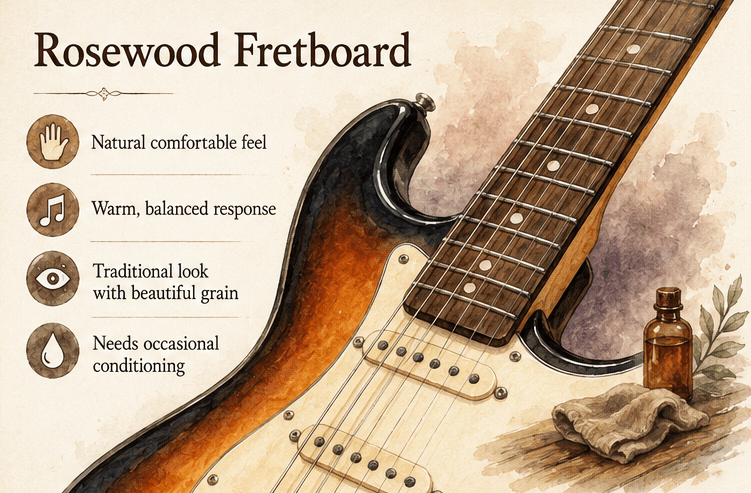
Rosewood Fretboard
A rosewood fretboard is one of the most traditional and widely used fretboard options. It is common on many electric guitars, acoustic guitars, basses, and custom instruments.
Rosewood usually has a brown color with visible grain. It can range from light brown to dark chocolate, sometimes with reddish or purple tones depending on the species and cut.
Unlike maple, rosewood fretboards are usually unfinished or lightly treated. This gives them a natural wood feel under the fingers.
How Rosewood Fretboards Feel
Rosewood fretboards usually feel natural, warm, and slightly textured.
They are not as glassy as finished maple and not always as slick as ebony. Instead, rosewood has a comfortable organic feel that many players find familiar and forgiving.
Rosewood often feels:
- Natural
- Warm
- Slightly porous
- Comfortable
- Balanced
- Organic
- Familiar
Many players like rosewood because it feels less slick than finished maple but less hard than ebony.
Rosewood Fretboard Tone
Rosewood is often described as warm, rounded, and balanced.
Compared with maple, rosewood may feel slightly softer in attack. Compared with ebony, it may feel less bright and less tight. This makes it a very versatile fretboard choice.
Common tonal descriptions of rosewood fretboards include:
- Warm
- Balanced
- Rounded
- Smooth
- Slightly softer attack
- Natural midrange
- Comfortable response
Rosewood works well across many genres because it does not strongly push the guitar toward extreme brightness or darkness.
Rosewood Fretboard Appearance
Rosewood gives a guitar a traditional and natural appearance.
Its darker color works well with almost any body finish, from sunburst and natural wood finishes to solid colors and modern custom finishes.
Common rosewood fretboard looks include:
- Medium brown
- Dark brown
- Chocolate brown
- Reddish brown
- Visible open grain
- Natural streaking
Rosewood looks especially classic with dot inlays, trapezoid inlays, cream binding, and vintage-style designs.
Rosewood Fretboard Maintenance
Rosewood fretboards usually need more maintenance than finished maple boards because they are often unfinished.
Over time, rosewood can become dry, especially in low-humidity environments. A dry fretboard may look pale, feel rough, or develop small cracks if neglected for a long time.
For maintenance, rosewood usually benefits from occasional conditioning with a guitar-safe fretboard oil or conditioner.
However, do not over-oil it. Too much oil can create residue, attract dirt, and soften the surface.
Rosewood maintenance summary
- Clean with a dry microfiber cloth
- Use fretboard conditioner occasionally
- Do not over-oil
- Avoid household oils
- Keep humidity stable
- Clean grime near frets during string changes
For most players, conditioning rosewood a few times per year is enough.
Pros and Cons of Rosewood Fretboards
Pros
Rosewood is one of the most versatile fretboard woods. It feels natural, looks classic, and works with many guitar styles.
Pros of rosewood fretboards:
- Warm and balanced feel
- Comfortable natural texture
- Classic appearance
- Works with many guitar designs
- Great for blues, rock, jazz, indie, pop, and general playing
- Less visually dirty than maple
Cons
Rosewood needs occasional care and can feel slightly less slick than ebony or finished maple.
Cons of rosewood fretboards:
- Needs occasional conditioning
- Can dry out in low humidity
- More porous texture may collect grime
- Not as bright-looking as maple
- Not as sleek or premium-feeling as ebony for some players
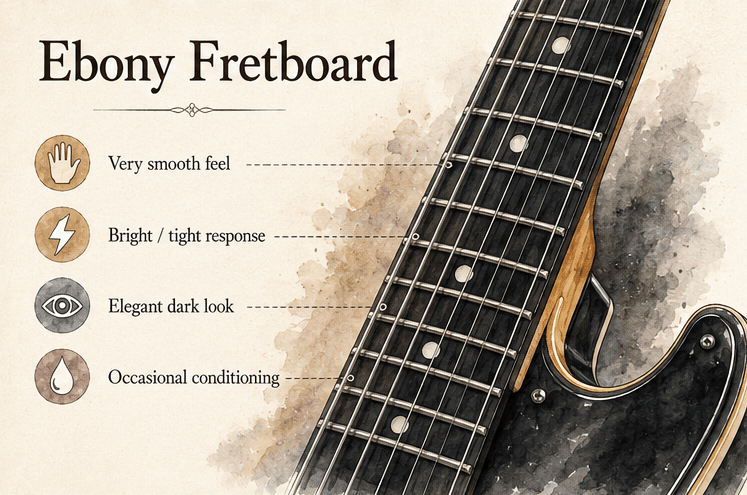
Ebony Fretboard
An ebony fretboard is often associated with premium guitars. It is dense, hard, smooth, and usually darker than maple or rosewood.
Ebony can range from deep black to dark brown with streaks. Some players prefer perfectly black ebony, while others appreciate striped or variegated ebony for its natural character.
Ebony is commonly used on high-end electric guitars, metal guitars, jazz guitars, classical guitars, and premium custom builds.
How Ebony Fretboards Feel
Ebony fretboards usually feel very smooth, hard, and fast.
Because ebony has a tight grain and dense structure, it often feels more polished under the fingers than rosewood. Many players describe ebony as slick, precise, and luxurious.
Ebony often feels:
- Smooth
- Dense
- Hard
- Fast
- Sleek
- Premium
- Precise
- Solid under the fingers
This makes ebony popular with lead players, metal players, jazz players, and anyone who wants a fast and refined playing surface.
Ebony Fretboard Tone
Ebony is often described as bright, tight, and articulate.
It can feel slightly sharper and more immediate than rosewood, while still having more depth and density than maple to some players.
Common tonal descriptions of ebony fretboards include:
- Bright
- Tight
- Clear
- Articulate
- Fast attack
- Strong note definition
- Focused response
Ebony is popular when players want clarity and precision, especially for fast playing, complex chords, or high-gain tones where note definition matters.
Ebony Fretboard Appearance
Ebony is visually striking.
A dark ebony fretboard can make a guitar look elegant, modern, and premium. It pairs especially well with pearl inlays, binding, natural finishes, black hardware, gold hardware, and high-end custom designs.
Common ebony fretboard looks include:
- Jet black
- Dark brown-black
- Striped ebony
- Macassar ebony
- Pale streaked ebony
- Smooth tight grain
A black ebony fretboard gives a guitar a clean and high-end visual identity. Streaked ebony gives a more organic and boutique appearance.
Ebony Fretboard Maintenance
Ebony is dense, but it can still dry out if neglected.
Like rosewood, ebony is usually unfinished and may need occasional conditioning. However, because it is dense, it does not absorb oil as easily as more porous woods.
Use a small amount of guitar-safe fretboard conditioner when needed, and always wipe off the excess.
Ebony maintenance summary
- Keep it clean with a microfiber cloth
- Condition occasionally
- Do not over-oil
- Keep humidity stable
- Watch for dryness or small cracks
- Clean near frets during string changes
Ebony can last a very long time with proper care.
Pros and Cons of Ebony Fretboards
Pros
Ebony is smooth, fast, and premium-feeling. It is an excellent choice for players who want precision and a high-end appearance.
Pros of ebony fretboards:
- Very smooth playing feel
- Fast and precise response
- Elegant dark appearance
- Strong durability
- Great for metal, jazz, fusion, and premium guitars
- Excellent note definition
- High-end visual appeal
Cons
Ebony can be more expensive and may require careful humidity control. Some players also find it too hard or bright-feeling compared with rosewood.
Cons of ebony fretboards:
- Usually more expensive
- Can dry out if neglected
- May feel harder under the fingers
- Less warm-feeling than rosewood
- Dark appearance may not suit every guitar design
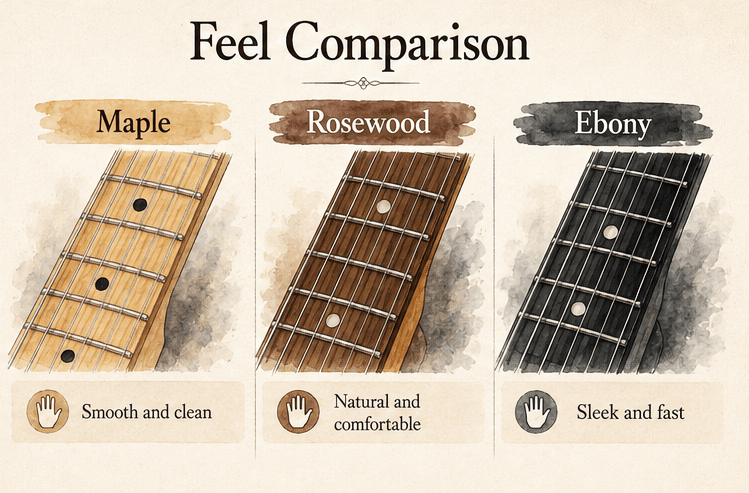
Maple vs Rosewood vs Ebony: Feel Comparison
Feel is one of the biggest differences between these fretboard woods.
Maple feel
Maple usually feels smooth and finished. It can feel slick if glossy or fast if satin. It has a firm, clean feel.
Rosewood feel
Rosewood feels more natural and slightly textured. It is comfortable and familiar, with a softer organic surface.
Ebony feel
Ebony feels dense, smooth, and fast. It has a polished, premium feel and strong precision.
Simple feel summary
Maple = smooth and clean
Rosewood = natural and comfortable
Ebony = sleek and fast
If you like a finished surface, maple may be best. If you like a raw wood feel, rosewood or ebony may suit you better. If you want the fastest and smoothest natural feel, ebony is often the strongest choice.
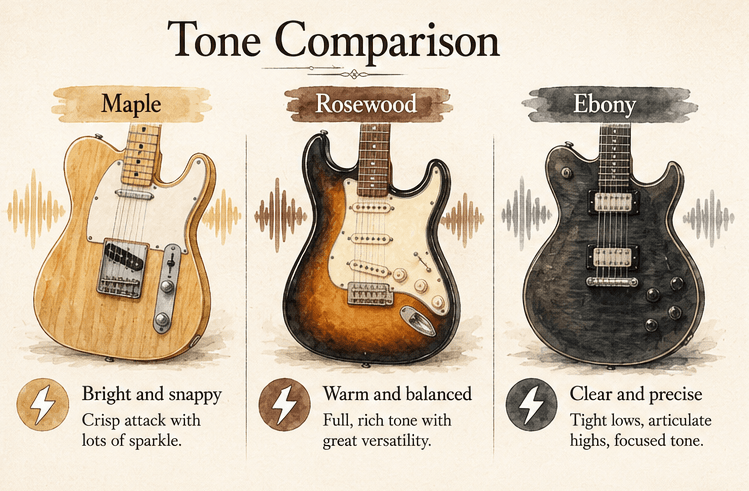
Maple vs Rosewood vs Ebony: Tone Comparison
Fretboard wood does not define your entire tone, but many players hear and feel differences in response.
Maple tone tendency
Maple is usually associated with brightness, snap, and clear attack.
Rosewood tone tendency
Rosewood is usually associated with warmth, balance, and a rounder response.
Ebony tone tendency
Ebony is usually associated with clarity, tightness, and fast articulation.
Simple tone summary
Maple = bright and snappy
Rosewood = warm and balanced
Ebony = clear and precise
Remember, these are general tendencies. Pickups, amp settings, bridge, strings, scale length, and guitar construction can make a much bigger difference.
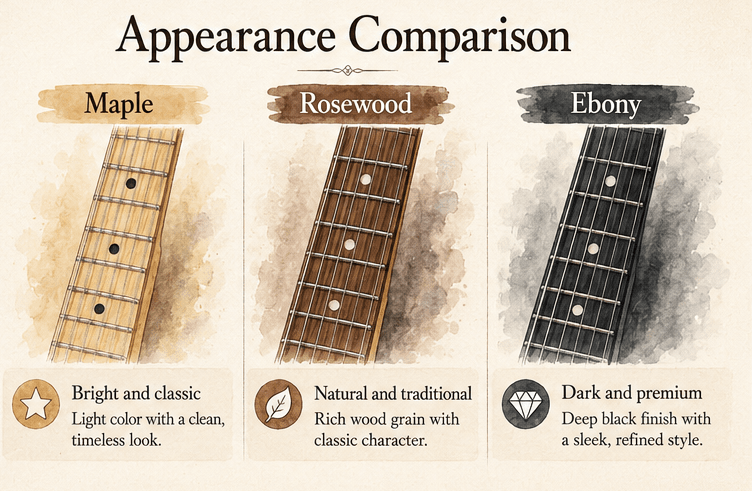
Maple vs Rosewood vs Ebony: Appearance Comparison
The visual difference is easy to see.
Maple appearance
Maple is light-colored and clean. It gives a guitar a bright, classic, and sometimes vintage look.
Rosewood appearance
Rosewood is medium to dark brown with visible grain. It gives a guitar a natural and traditional look.
Ebony appearance
Ebony is dark, sleek, and premium. It gives a guitar a refined and high-end look.
Simple appearance summary
Maple = bright and classic
Rosewood = natural and traditional
Ebony = dark and premium
For custom guitars, fretboard wood can strongly affect the overall design style.
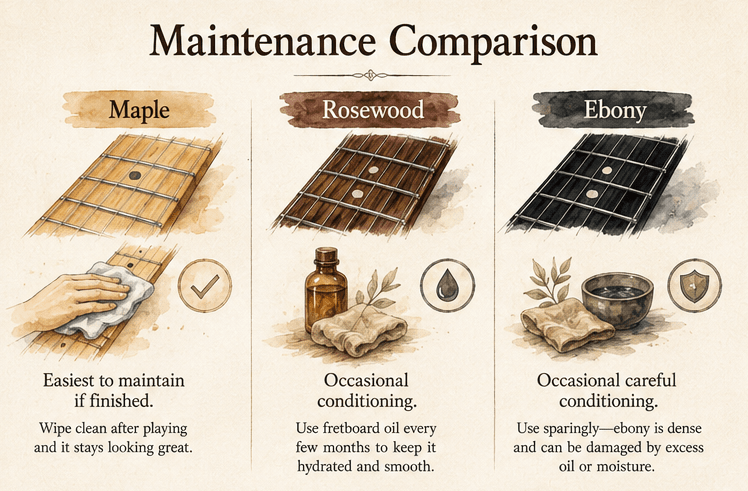
Maple vs Rosewood vs Ebony: Maintenance Comparison
Maintenance is another important difference.
Maple maintenance
Finished maple is usually the easiest to maintain. It does not need oil and can be wiped clean like a finished surface.
Rosewood maintenance
Rosewood usually needs occasional conditioning because it is often unfinished. It can collect grime near frets and may dry out if neglected.
Ebony maintenance
Ebony also needs occasional conditioning, but it is denser and smoother than rosewood. It should not be over-oiled.
Simple maintenance summary
Maple = easiest if finished
Rosewood = occasional oil and cleaning
Ebony = occasional careful conditioning
If you want the lowest-maintenance fretboard, finished maple is usually the easiest option.
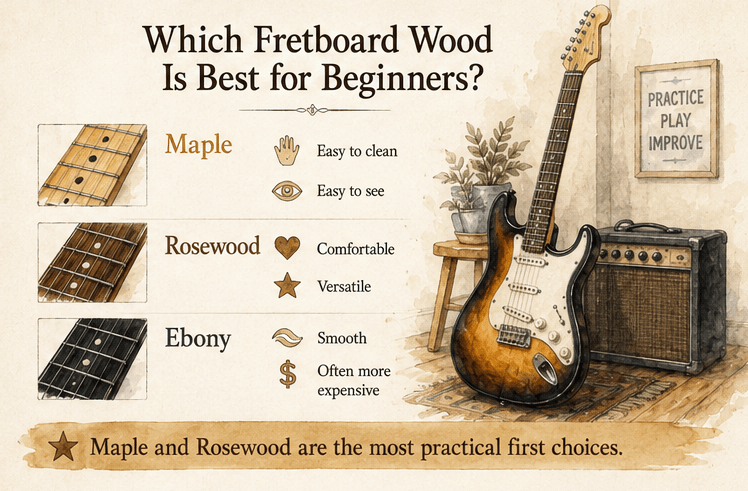
Which Fretboard Wood Is Best for Beginners?
For beginners, fretboard wood is less important than overall comfort, setup quality, tuning stability, and neck feel.
However, each wood has beginner-friendly advantages.
Maple for beginners
Maple is easy to clean and visually clear. The light fretboard can make position markers easy to see.
Rosewood for beginners
Rosewood feels comfortable and natural. It is very common and works well for almost every style.
Ebony for beginners
Ebony feels smooth and fast, but it is often found on more expensive guitars.
Best beginner choice
For most beginners, rosewood or maple are the most common and practical choices. Ebony is excellent but not necessary for a first guitar.
The best beginner fretboard is the one attached to a guitar that feels comfortable and is properly set up.
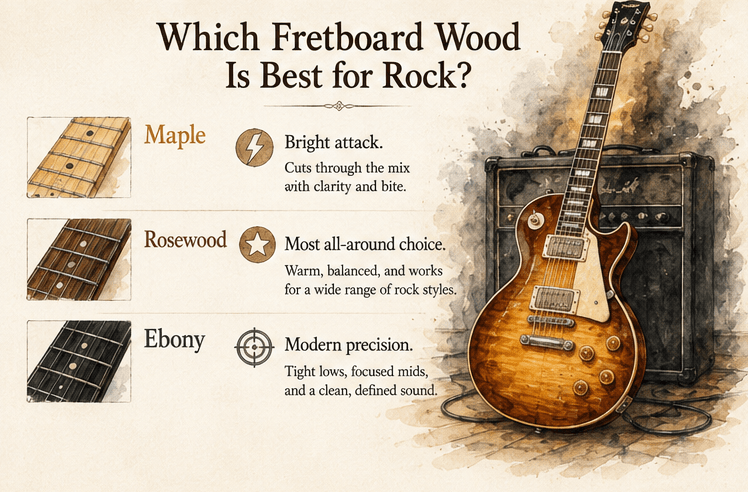
Which Fretboard Wood Is Best for Rock?
Rock players can use all three fretboard woods.
Maple for rock
Maple works well for brighter rock tones, classic rock, indie rock, and players who want clear attack.
Rosewood for rock
Rosewood is very versatile and works well for classic rock, blues rock, alternative rock, and hard rock.
Ebony for rock
Ebony is excellent for modern rock, progressive rock, and players who want tight response and clarity.
Best rock choice
Rosewood is the most all-around choice. Maple is great for bright attack. Ebony is great for modern precision.
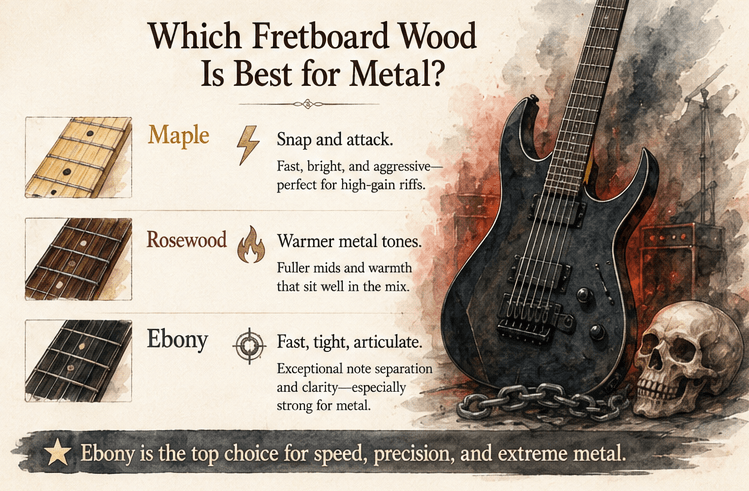
Which Fretboard Wood Is Best for Metal?
Metal players often prefer ebony or maple because both can feel clear, tight, and precise.
Maple for metal
Maple can work well for modern metal if the player wants snap and attack.
Rosewood for metal
Rosewood can still work well, especially for warmer or thicker metal tones.
Ebony for metal
Ebony is especially popular for metal because it feels fast and articulate. It pairs well with high-output pickups, extended range guitars, and modern builds.
Best metal choice
Ebony is often the strongest choice for metal, especially for fast playing and tight note definition.
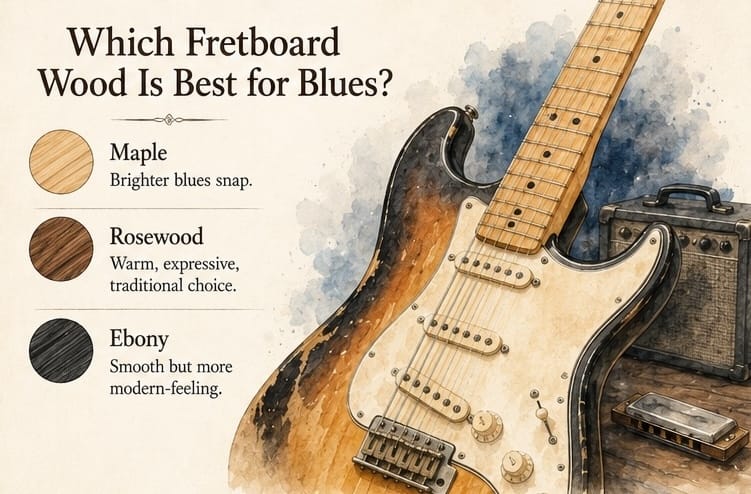
Which Fretboard Wood Is Best for Blues?
Blues players often enjoy rosewood because of its warm, comfortable, and traditional feel.
Maple for blues
Maple works well for brighter blues tones with snap and clarity.
Rosewood for blues
Rosewood is excellent for warm, expressive blues playing.
Ebony for blues
Ebony can work for blues, especially if the player wants a smooth and refined feel, but it may feel more modern than traditional.
Best blues choice
Rosewood is usually the most traditional and versatile choice for blues.
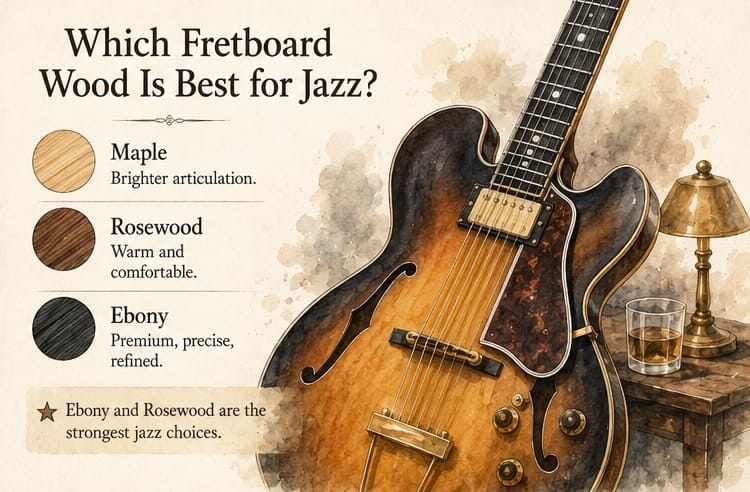
Which Fretboard Wood Is Best for Jazz?
Jazz players often prefer warmth, smoothness, and clean note control.
Maple for jazz
Maple is less traditional for jazz but can work if you want brighter articulation.
Rosewood for jazz
Rosewood offers warmth and comfort, making it a good choice for many jazz players.
Ebony for jazz
Ebony is very popular on higher-end jazz guitars because it feels smooth and precise and offers a refined appearance.
Best jazz choice
Ebony or rosewood are usually the strongest choices for jazz. Ebony feels more premium and precise. Rosewood feels warmer and more traditional.
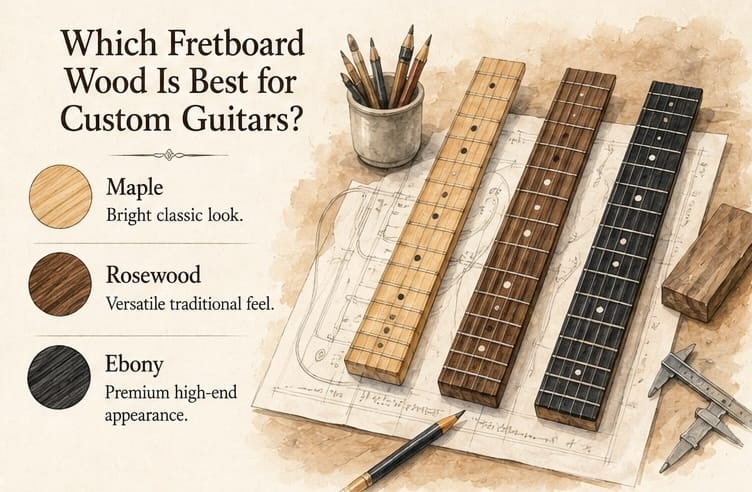
Which Fretboard Wood Is Best for Custom Guitars?
For custom guitars, fretboard wood should match both the player’s feel preference and the guitar’s visual design.
Choose maple if you want:
- Bright visual style
- Snappy response
- Classic S-style or T-style look
- Easy cleaning if finished
- A clean and vintage-inspired appearance
Choose rosewood if you want:
- Warm natural feel
- Traditional appearance
- Balanced response
- Versatility across many styles
- Comfortable raw wood texture
Choose ebony if you want:
- Premium feel
- Dark elegant look
- Fast and smooth playing surface
- Strong note definition
- High-end custom appearance
For custom builds, ebony often gives the most premium impression, rosewood gives the most versatile traditional feel, and maple gives the cleanest classic look.
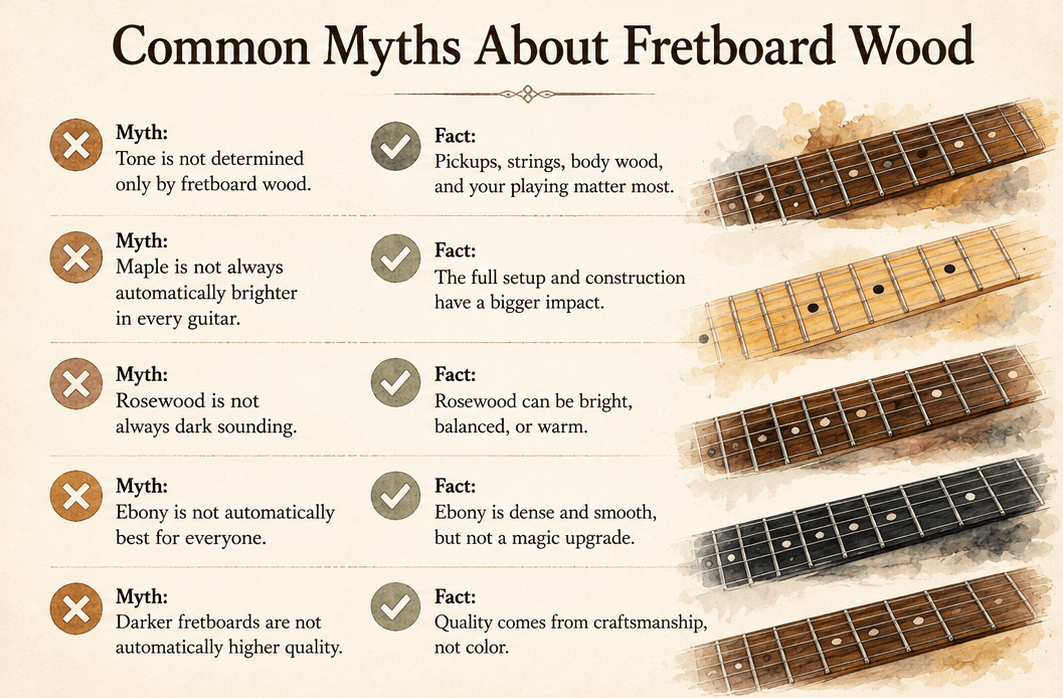
Common Myths About Fretboard Wood
Myth 1: Fretboard wood completely determines tone
Fretboard wood can influence feel and response, but it does not control the entire sound. Pickups, amp, strings, bridge, scale length, and setup are usually more noticeable.
Myth 2: Maple is always better for bright tone
Maple often feels bright and snappy, but a maple fretboard guitar can still sound warm depending on pickups, body wood, and amp settings.
Myth 3: Rosewood is always darker sounding
Rosewood is often described as warmer, but it can still sound clear and articulate in the right guitar.
Myth 4: Ebony is always the best because it is premium
Ebony is premium and smooth, but not every player prefers its hard, dense feel. Some players prefer the softer feel of rosewood or the finished feel of maple.
Myth 5: Darker fretboards are always higher quality
A dark fretboard can look premium, but quality depends on wood selection, drying, fretwork, construction, and finishing. Color alone does not determine quality.
How to Choose the Right Fretboard Wood
The best way to choose is to think about feel first, then appearance, then tone.
Ask yourself:
- Do I like a finished or unfinished fretboard feel?
- Do I prefer bright, warm, or precise response?
- Do I want a classic, natural, or premium look?
- Do I want low maintenance?
- Do I play mostly clean, high-gain, rhythm, or lead?
- Do I bend strings often?
- Do I care more about vintage style or modern performance?
- Am I designing a custom guitar with a specific visual theme?
Choose Maple if:
You want a bright, clean, classic look with a smooth finished feel and snappy response.
Choose Rosewood if:
You want a warm, natural, comfortable fretboard that works well for almost every style.
Choose Ebony if:
You want a sleek, fast, premium-feeling fretboard with strong clarity and a high-end appearance.
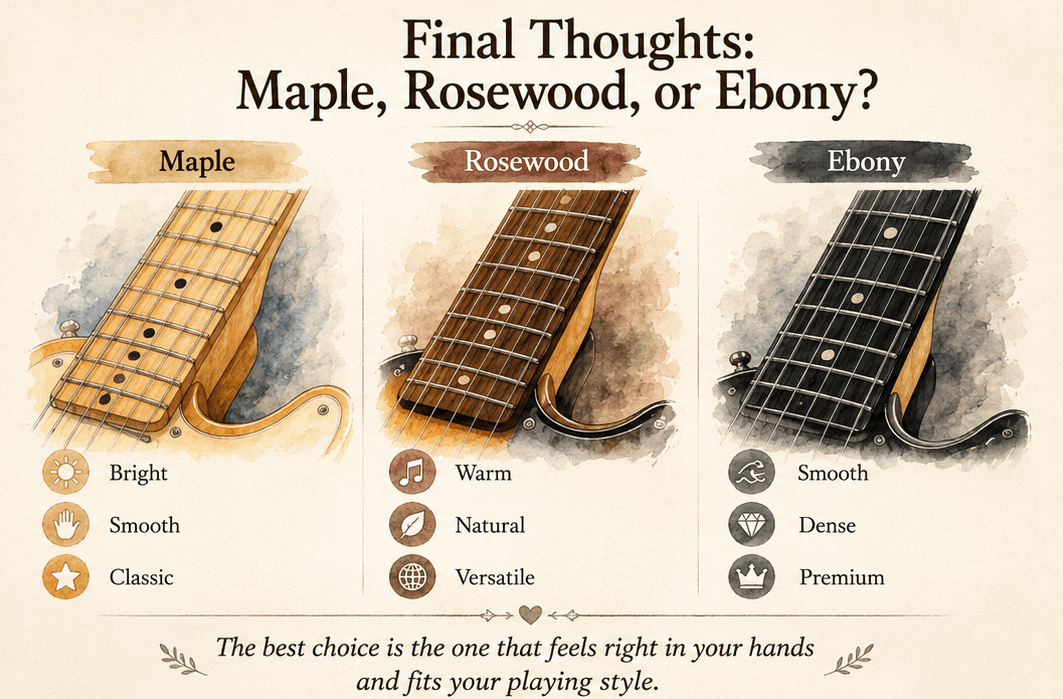
Maple, Rosewood, or Ebony?
Maple, rosewood, and ebony are all excellent fretboard woods. The best choice depends on what you want from your guitar.
Maple is bright, smooth, classic, and easy to maintain when finished. It is a great choice for players who like snappy response and a clean vintage-inspired look.
Rosewood is warm, natural, comfortable, and versatile. It is one of the safest choices for players who want a traditional feel that works across many genres.
Ebony is smooth, dense, fast, and premium. It is ideal for players who want precision, elegance, and a sleek high-end playing surface.
There is no universal best fretboard wood. The right one is the one that feels good in your hands, matches your playing style, and fits the overall design of your guitar.
A great fretboard should make the guitar feel comfortable, inspiring, and natural every time you play.